
Operations | Monitoring | ITSM | DevOps | Cloud

gRPC Mocks, Tests and Contract Checks From a .proto

Change one field in a.proto from double to string, and nothing complains. The code compiles, the deploy goes green, and a service still built from the old contract keeps answering with a double. Here’s what Go’s protobuf runtime does when a client on the new contract reads that answer: No error. risk_score comes back empty, and the nine bytes of the double are tucked away as unknown fields.

Test and Mock GraphQL APIs Without Trusting the 200

Replay a GraphQL recording at the server that produced it, and every request comes back 200 OK. Here is one of those 200s, from a Session query whose recorded token has expired: A GraphQL server reports most failures inside a successful HTTP response, so any check that stops at the status code passes this request. And that is the second way GraphQL hides from URL-shaped tooling.

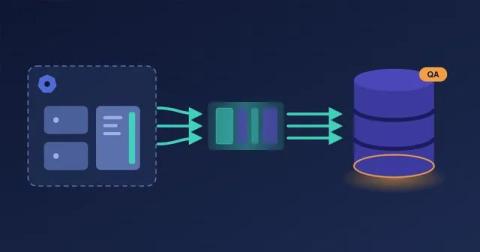
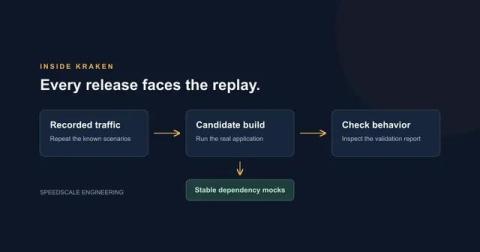
Inside Kraken: Regression Testing With Traffic Replay

A readiness check should make a release safer. During one release validation, ours kept Kraken’s traffic replays stuck in Initializing until they timed out. The operator was asking Kubernetes for EndpointSlices. Its installed permissions did not allow that request. The code needed a real cluster, the generated permissions, and a replay trying to start before that mistake became obvious. Kraken put those pieces together during release validation.

5 Questions to Ask Before the Next Cloud Outage

On October 20, a power failure in one of Google Cloud’s three London zones disrupted Revolut, Lloyds, HSBC and others for hours. One zone failed, errors spread region-wide, and Google warned customers they might not be able to create new workloads to fail over to. Most teams find out how resilient they are during an outage, not before one. These five questions let you find out first.

Test AI-Generated Code with Real Traffic#aiagents #devops #observability #shiftleft #softwaretesting

AI can generate code in seconds, but testing it against real production behavior is where developers get stuck. Learn how capturing and replaying actual production traffic in development helps you catch bugs before you deploy!

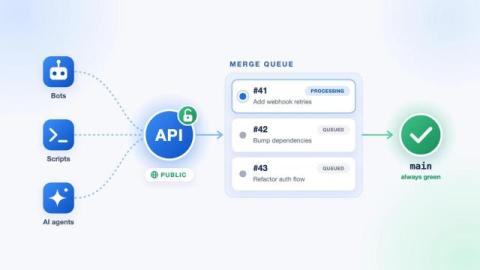
Merge queue APIs now available in Bitbucket Cloud

Merge Queues help keep your busy branches stable by testing how changes work together before they’re merged. Today, we’re introducing public APIs for Merge Queues, available to all Standard and Premium workspaces in Bitbucket Cloud. The new APIs let your tools use the existing merge endpoint to queue pull requests, track their progress and respond to the outcome.

Feature Spotlight: Replay Progress Tracking #kubernetes #mocktest #devops #appperformance

Learn how to track cluster performance in real time using the replay progress panel, which highlights key phases including provision, mock, app, load, analyze, and result. You will also discover how to easily troubleshoot failed runs by expanding component lanes to review specific step reasons and cluster events. Learn more: speedscale.com.

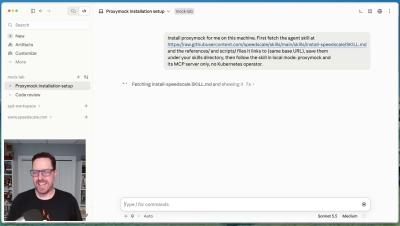
Feature Spotlight: Automatic Testing with Proxymock MCP Skills #aiagents #mcpserver #softwaretesting

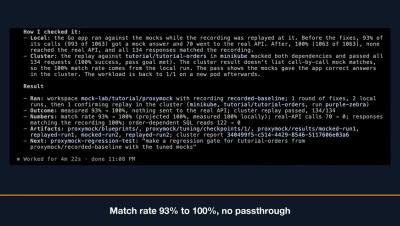
Learn how to integrate your AI coding agent with Speedscale using the MCP server to record, replay, tune mocks, and analyze reports directly within your workspace. Streamline your testing workflow by letting your agent automatically capture traffic, resolve failing responses, and optimize match rates. Learn more: speedscale.com.

Feature Spotlight: Testing GraphQL #graphql #apitesting #developertools #techtutorial #devops

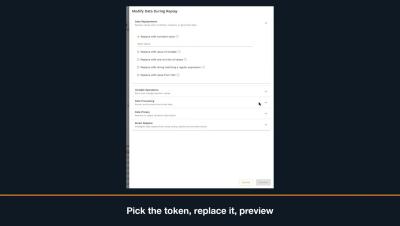
Learn how to resolve failed GraphQL session queries by updating expired tokens before replaying your snapshot. This video demonstrates how to find the GraphQL operation, edit variable values by path, and successfully pass replay checks. Learn more: speedscale.com.

Feature Spotlight: Import & Export to Load Testing Tools #api #postman #openapi #loadtesting #devops

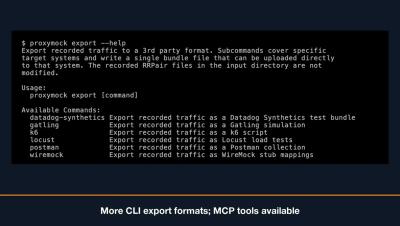
Proxymock allows you to import existing Postman collections, browser HAR files, and OpenAPI specifications to instantly create test requests and mock responses. You can also pull traffic directly from cloud storage buckets, or export your requests into load testing scripts for tools like K6, Gatling, and Locust. Coding agents can even manage these imports and exports using integrated MCP tools. Learn more: speedscale.com.

Feature Spotlight: Session-based Replay #trafficanalysis #api #developertools #techtutorial

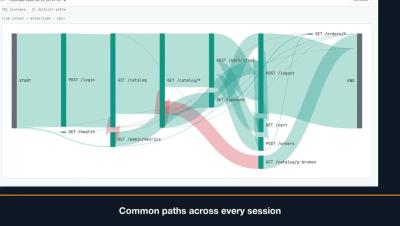
This video provides an overview of using Sessions to group traffic by actor credentials, track individual user journeys chronologically, and analyze request flows. It also covers how to check replay readiness for JWT sessions, replay recorded user journeys at their original pace, verify pass/fail counts, and save or sample specific sessions for easy sharing. Learn more: speedscale.com.

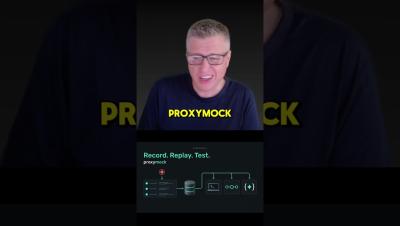
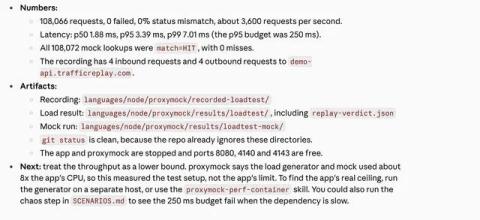
Quick Load Testing & Mocking with Proxymock and AI #loadtesting #mocktest #softwaretesting #devops

Learn how to quickly set up a load testing foundation for your Node app using the free ProxyMock tool combined with an AI coding agent. This walkthrough demonstrates how to record traffic, mock dependencies, and analyze latency distribution results in just a few simple steps. Learn more: speedscale.com.

Nobody Wants Your New AI Agent #devops #aiagents #softwaredevelopment #techtrends #ai

DevOps customers are rejecting standalone AI agents and web interfaces in favor of integrating context directly into their existing harnesses, such as Copilot or Claude. Rather than logging into separate tools, developers prefer combining models and technologies within a single context window to streamline software development and debugging. Learn more: speedscale.com.

Load Test One Endpoint, Watch the Rest

What happens to transaction posting when statement traffic gets expensive? That’s the question a bank’s platform team actually needs answered before a busy month-end. It’s also a question most load tests can’t ask, because they turn one dial for the whole recording. Statements get heavier, posting gets heavier, and the average latency across both looks fine right up until customers can’t move money.

FastAPI Shipped Three Breaking Changes in 21 Hours: What to Check

FastAPI released 0.146.0, 0.147.0, and 0.148.0 between Sunday afternoon and Monday morning (UTC), and each one is labeled a breaking change. None of them will crash your app on startup. They change what values your endpoints receive, which is the kind of change that passes CI and then shows up as odd data a week later. At Scout Monitoring, we monitor a lot of FastAPI apps, and a loosely pinned fastapi dependency is the most common way these releases will arrive.
Sponsored Post

Chaos Monkey Won't Find Your Bug

We shipped a chaos feature that never caused any chaos. Our mock server has had a fault-injection effect for years with a straightforward job: withhold the response entirely and see whether the caller copes. Last week I audited it against the actual code path. It had never withheld anything. The handler returned early without writing a response. Go's net/http then did what it is designed to do, which is synthesize a 200 OK and flush the recorded body. Every experiment anybody ever ran with that effect handed the application a perfectly good answer, and every one of them passed.

Observability Never Really Shifted Left

We made software development faster. Now we need to make validation faster, too. For the last decade we have shifted development left. Testing, security, performance, and CI/CD all moved closer to the developer. Observability mostly did not. It still starts after deployment (we covered the incident side of this in Your Observability Stack Found the Fire), which means the people writing the code rarely have meaningful production behavior to observe while they build.

The Infrastructure Puzzle: How AI-Enabled Event Management Software Powers Complex Event Programs

When registration, attendee data, check-in, communications, and reporting stop working in concert, complex programs break. A connected online event management software setup gives teams one operating layer, not yet another stack of tools that complicates work.

Holiday readiness: run your first load test with skills

Before you can answer whether checkout will survive Black Friday, you need a test you can rerun. In this demo, we used a coding agent and the Speedscale skills to record a Node app, mock its downstream API, and run a 30-second load test with 10 virtual users. That’s a small first step in holiday readiness. It gives you a working test and a result to inspect, with time left to fix what you find before a code freeze.

Load Test PostgreSQL Instantly using Production Recordings

The first PostgreSQL post ran on a laptop: a demo app, a Docker container, and the proxymock CLI. That is the fastest way to see the idea. It is also not where your database problems live. Your real query mix lives in the cluster, where a Java service with a connection pool, an ORM and a schema migration tool sends the statements nobody wrote by hand. This post deploys an open source banking app to Kubernetes and records the queries one of its services sends to PostgreSQL.

Judgment, not generation: rebuilding our AI API Classifier on Jev

Rebuild AI API classification with Jev to cut costs, reduce latency, improve calibration, and make production decisions more efficient without sacrificing accuracy. Replacing the judgment step in a production classification pipeline with a purpose-built decision model changes the economics of the problem entirely.

FastAPI 0.142 Turns On OpenTelemetry by Default. Here's What It Records.

FastAPI 0.142.0 ships with OpenTelemetry built in. Install fastapi, set one environment variable, and every request produces a trace, metrics, and error logs. No middleware, no instrumentation package, no code. That’s a big change for a framework most Python teams instrument by hand. It’s also easy to misread. The defaults record more than some teams expect in one place, and less than others assume in another. Here’s what you actually get.

The Missing Piece in Your AI Coding Agent #aiagents #aitools #devops #debugging #softwareengineer

Stop making your AI coding agent guess how your app works with massive prompts. We feed live API traffic and runtime evidence directly into your agent so it can automatically detect bugs, run replays, and fix code fast! Learn more: speedscale.com.

Prove Your SLAs: How Yext Ties Synthetic Monitoring to SLOs with Checkly (Live-Webinar)

Yext uses synthetic monitoring to prove and meet SLAs, by tying Checkly checks directly to SLOs and user-facing SLIs. Stefan (Developer Relations), Braxton (Solutions), and Shikhar (Engineering Productivity at Yext) cover the SLA/SLO/SLI basics, the math behind "all these nines", and how Yext turns those targets into concrete checks with monitoring as code.