The latest News and Information on Continuous Integration and Development, and related technologies.
This is a guest post from Kamesh Pemmaraju of Platform9. As organizations move to a containerized world, whether by producing containerized software, consuming it or both, the need for a managed Kubernetes offering and an Enterprise-tested private Docker registry is apparent. With the introduction of Platform9‘s new Freedom Plan for managed Kubernetes, you can combine it with JFrog Container Registry and power up your containerization transformation for free.
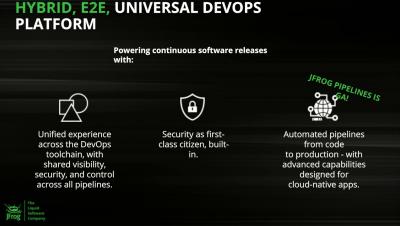
With the release of the JFrog DevOps Platform, we launched the first general availability of JFrog Pipelines, our powerful system for next-generation CI/CD. Pipelines’ many great features help make DevOps pipelines automation rapid, repeatable, and secure. With flexible runtime management, a robust DSL, and a real-time interactive UI, Pipelines is a muscular CI/CD solution we know you’ll love. But what makes Pipelines different?
DevOps is a software development practice that combines development and operations teams. When organizations use DevOps, they typically also use agile methodologies for managing and completing projects. The combination of DevOps and agile practices enables teams to build software faster and more efficiently. One of the primary tools of DevOps is the continuous integration/continuous delivery (CI/CD) pipeline.
We now support the upload of Cargo packages to the Cloudsmith platform using the native Cargo publish command.
Thousands of devices means thousands of software components, metadata items, and builds. Coordinating all that data for an Internet of Things system requires a binaries manager built for reliability and scale. That’s the challenge that faced MicroEJ, a software vendor of cost-driven solutions for embedded and IoT devices.