
Operations | Monitoring | ITSM | DevOps | Cloud

The latest News and Information on Cloud monitoring, security and related technologies.

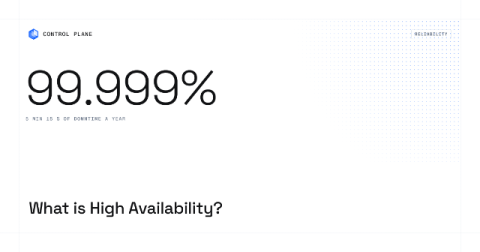
What Is High Availability? How It Works and How Many Nines You Actually Need

High availability (HA) is a system’s ability to keep serving users when individual components fail, from a single server up to a whole cloud region or provider. It is measured in nines: 99.9% allows about 8 hours 46 minutes of downtime a year, 99.99% about 52 minutes, and 99.999% about 5 minutes 15 seconds. HA works by removing single points of failure through redundancy, health checks, automatic failover, and replicated data.
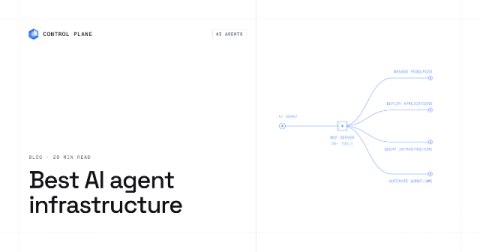
10 Best AI Agent Infrastructure Platforms in 2026

AI agent infrastructure is the set of platforms that run agents and the code they write. It has three layers: sandboxes that isolate untrusted, model-generated code, runtimes that run the agent and its services in production, and orchestration layers that save an agent’s progress so a long run can resume after a failure. Most production agents need more than one layer. This guide compares 10 platforms across all three, with isolation, state, deployment, and compliance for each.

Shipped: Project this month's AI cost before the invoice closes

The question comes up on the 10th, the 15th, and again on the 25th. Where is AI spend going to end up this month? The invoice won’t tell you until it’s closes, and by then there’s nothing left to forecast. “If I’m looking at this on the 15th, I want to know where we’re going to land.” That’s how a finance lead put it during a persona session in September, and it’sthe whole job. You have half a month of real usage behind you.

Claude Opus pricing in 2026: every model, every rate, and whether it's worth it

Claude Opus pricing is $4 per million input tokens and $20 per million output tokens on Claude Opus 5.5, the current model, with cache reads at $0.20 and batch jobs at $2/$10. Opus 5 and the legacy 4-series bill at $5/$25. The 1M context window carries no surcharge. Every Opus model Anthropic shipped in 2026 held the same line: $5 in, $25 out, per million tokens. Opus 4.6 in February, 4.7 in April, 4.8 in May, Opus 5 in July. Four releases, one price. On September 22, 2026, the line broke.

Shipped: Views now work for every access level

Most people who open CloudZero care about one slice of the spend, like their team, their product, or their region. A View gives them that slice in one click, with the grouping and filters already set, so nobody has to rebuild the same Explorer query every week. Views now work for everyone in your organization, including people with scoped access.

That 2am incident cost you more than downtime

It's 2:14am. A pager alert wakes an on-call engineer for a checkout failure hitting a slice of customers. By the time they've pulled the right logs, cross-checked the deploy history, and finally gotten the bug to happen again in front of them, the sun's coming up. The incident report will list two hours of downtime. It won't say anything about the day that engineer just lost, or the fact that nobody on your team could have told you in advance how long that reproduction step was going to take.