Operations | Monitoring | ITSM | DevOps | Cloud

The latest News and Information on Cloud monitoring, security and related technologies.

Replay messages in Azure Service Bus dead-letter queue

When working and dealing with asynchronous messaging patterns – in this case, using Azure Service Bus – depending on the requirements, you will find many scenarios when you need to reprocess messages. Sometimes, a message failed because a system was offline for a certain period, there was a bug with the service, and we needed to resend specific messages and many other reasons.

Harnessing PowerShell to Optimize SharePoint Online Management

In the realm of collaborative digital environments, SharePoint Online emerges as a quintessential platform fostering seamless interactions, data sharing, and project coordination among teams. As part of the Microsoft 365 suite, it encapsulates a rich array of features tailored to meet the diversified needs of modern organizations.

AWS vs GCP: Choosing the Best Cloud Provider for Your Needs

If you are confused about whether to go for AWS or Google Cloud (GCP) in 2023, then you should read this article. Both AWS and GCP have made tremendous progress over the past few years. There was a time when AWS was much ahead of Google, but not anymore. Google has reduced the gap to a great extent; it even surpasses AWS in some areas, especially data analytics. However, there is no one-size-fits-all answer to this problem.

Logic Apps standard The developer experience

In this session titled " Logic Apps standard: The developer experience" by Wagner Silveira, Senior program manager at Microsoft, offers an insightful dive into Logic Apps Standard from a developer's lens. He delves into the existing Logic App model, differentiating between Built-in and Azure connections, and highlighting the distinction between portal and local Logic App workflow development. Uncover the latest developer tools, including the enhanced designer 2.0, data mapper for visual component mapping, custom code support, and the convenient export tool.

5 Reasons Why You Should Migrate to the Cloud in 2023

Even though cloud migration is rapidly increasing globally, larger enterprises may hesitate to adopt this technology. This is typically the result of imagined obstacles like possible dangers, complex migrations, or a deficiency of specialized knowledge. Organizations that choose not to go to the cloud, however, run the risk of suffering a far more significant cost for their inaction. This article outlines the top five arguments for moving your company toward cloud computing and overcoming reluctance.

Weighing the Costs and Returns of Colocation

As businesses continue to expand their digital footprints, the demand for efficient and secure data management solutions has never been greater. Colocation, the practice of housing servers and IT infrastructure in third-party data centres, has emerged as an attractive option for enterprises seeking enhanced scalability, reliability, and cost-effectiveness. However, before making a decision on colocation, it is vital to carefully assess the financial aspects associated with this service.

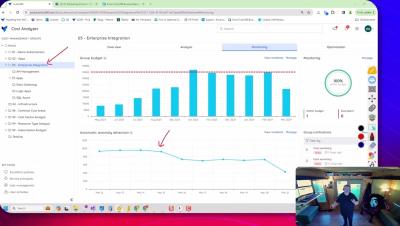
Plan new architectures and track your cloud footprint with Cloudcraft by Datadog

In a rapidly expanding, highly distributed cloud infrastructure environment, it can be difficult to make decisions about the design and management of cloud architectures. That’s because it’s hard for a single observer to see the full scope when their organization owns thousands of cloud resources distributed across hundreds of accounts. You need broad, complete visibility in order to find underutilized resources and other forms of bloat.

Azure Functions Distributed Tracing

In today’s cloud-centric, serverless computing landscape, applications are increasingly distributed and complex, composed of numerous microservices, functions, and external dependencies. Azure Functions, a serverless compute service offered by Microsoft Azure, plays a pivotal role in building scalable, event-driven applications.

5 Ways to Streamline IT Operations With the UK's Northern Connectivity Hub

The Edinburgh South Gyle colocation data centre is the largest and most connected in Scotland, and one of the most connected north of London. In fact, there are 27 carriers available at the centre — more than double the number that any of our other data centres have. In fact, it’s so large and well-connected that we refer to it as the UK’s Northern Connectivity Hub. But what does that mean for your business - and how can you benefit from the colocation services available?