Creating budgets and budget alerts in Google Cloud #FinOps
Welcome to Tutorial Time where we show you what you can learn from our interactive tutorials. Watch to learn how to monitor your spending using budgets and budget alerts.


The latest News and Information on Cloud monitoring, security and related technologies.
Data has become a critical asset in today’s digital era, making its storage, management, and accessibility crucial to many organizations’ operations. Microsoft’s Azure provides a suite of cloud storage solutions designed to address these needs. Among the tools provided by Azure is AzCopy, a command-line utility designed to simplify data transfer to and from Azure Blob, File, and Table storage.
Microsoft’s Azure Data Lake Storage (ADLS) has been a vital component for organizations aiming to build scalable and secure data lakes. As technology evolves, transitioning from Azure Data Lake Storage Gen1 to Gen2 has become increasingly important. This article aims to guide readers through the essential considerations, detailed processes, and best practices involved in making this shift.
Out of more than 100 services that Amazon Web Services (AWS) provides, Amazon CloudWatch was one of the earliest services provided by AWS. CloudWatch was announced on May 17th, 2009, and it was the 7th service released after S3, SQS, SimpleDB, EBS, EC2, and EMR. AWS CloudWatch is a suite of tools that encompasses a wide range of cloud resources, including collecting logs and metrics; monitoring; visualization and alerting; and automated action in response to operational health changes.
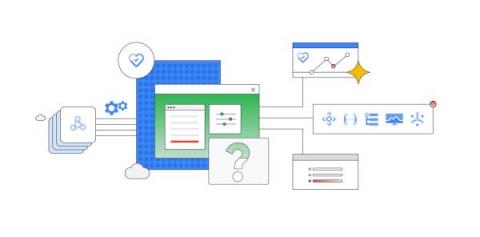
Personalized Service Health sends custom granular alerts about Google Cloud service disruptions, and integrates with incident management tooling.
Amazon Elastic Container Service (ECS) is a versatile platform that enables developers to build scalable and resilient applications using containers. However, containerized services, like Node.js applications, may face challenges like memory leaks, which can result in container crashes. In this blog post, we’ll delve into the process of identifying and addressing memory leaks in Node.js containers running on ECS. First, let’s look closer at what a memory leak is.
The post-pandemic world has transformed our work habits and the landscape of conducting business. Organizations now take the hybrid approach to work, wherein employees may work from an office, while travelling, or from a remote location. This fundamental shift has accelerated the pace of cloud adoption, as the cloud makes data access possible from anyplace, anytime. But the cloud brings with it a set of complexities that must be managed.