
Operations | Monitoring | ITSM | DevOps | Cloud

The latest News and Information on Cloud monitoring, security and related technologies.

Cloud Visibility: Announcing Kentik Map for Google Cloud

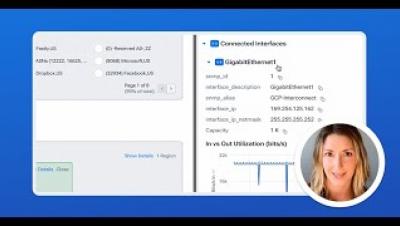
Learn how Kentik Cloud can improve efficiency in managing Google Cloud infrastructure. It showcases Kentik Map, which provides a constantly updated, detailed visualization of your hybrid cloud environment, illuminating how resources interact and are nested within each other. Watch as we demonstrate how to analyze real-time traffic flow, troubleshoot connection problems, and use the routing table to understand network communication issues. Whether you’re resolving network problems, onboarding new team members, or migrating applications to the cloud, the Kentik Map offers a powerful tool to enhance your productivity in Google Cloud.
Dashboard Fridays: Sample AWS dashboards

Join Adam Kinniburgh and Dan Watts as they showcase these out-of-the-box AWS dashboards, which are instantly loaded up in your SquaredUp environment when you connect to AWS. These SquaredUp AWS dashboards allow engineers to have a better understanding of their AWS environments immediately, with the possibility of adding metrics from other sources to support the environment view. Stay tuned to see a walkthrough of each dashboard, and understand the challenges they solve.

Throw custom exceptions in Logic Apps: Using an API Management (Part V)

Welcome to the fifth and last part of this series of blog posts on How to throw custom exceptions inside Logic Apps. In all those posts, we talk about the following: The last approach we want to address in this series is another out-of-the-box idea: using an API exposed in API Management to throw back the exception. This approach is similar to the previous one.

Optimizing Your K8s Nodes Using FinOps Tools? Try This Instead...

June 7, 2023 It’s no secret that Kubernetes is one of the fastest-growing technologies in use today for deploying and operating applications of all types in the cloud. It’s also no secret that Kubernetes’ popularity is a significant contributor to fast-growing cloud bills. FinOps teams are constantly looking for ways to lower their cloud spend, in cooperation with the DevOps, Engineering and App owner teams that control this infrastructure.

Understand your Kubernetes and ECS spend with Datadog Cloud Cost Management

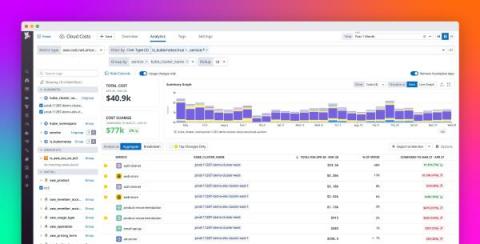
Rising container usage has fueled a growing reliance on container orchestration systems such as Kubernetes, EKS, and ECS. As organizations increasingly opt to run these systems in the cloud, their cloud spend tends not only to grow but also to become more opaque due to the dynamic complexity of these environments. Typically, various services, teams, and products share cluster resources, and as nodes are added and removed, those resources continuously shift.

Delivering UK-wide edge computing with platformEDGE

As the UK’s edge infrastructure provider, we’ve launched platformEDGE™ — a next-generation platform that will enable regional businesses across the UK to harness the opportunity of digital transformation. PlatformEDGE is a UK-wide integrated infrastructure that enables scalable, high-performance, low-latency edge application delivery.

What Is Hybrid Cloud Automation? Examples, Use Cases + More Essential Info

What is hybrid cloud automation, and how can it help manage specific tasks in your environment? With more and more infrastructure moving into public, private, hybrid, and multi cloud environments, you may be exploring ways to automate manual processes that happen in the cloud — like configuration and deployment tasks. Let's dive into the definition and benefits of cloud automation, as well as some methods to approach this strategy in increasingly complex heterogenous computing environments.

How to Be a Target for Cybercriminals: Reuse Your Passwords

Tempting though it may be, you should never reuse a password. Every account should have its own complex, unique password or passphrase to reduce the risk of compromised credentials and account takeover attacks. Employees are often unintentionally responsible for data breaches, so organizations should ensure that their users have strong credentials that cannot be easily guessed.