Operations | Monitoring | ITSM | DevOps | Cloud

The latest News and Information on Cloud monitoring, security and related technologies.

Perspectives from the Edge: Data Sovereignty with KPMG

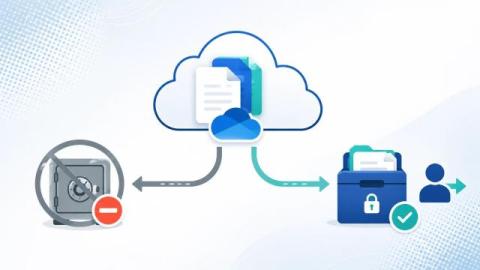
Data sovereignty isn’t a checkbox – it’s now a board-level priority. Data sovereignty is everywhere right now, but for many organisations, it still feels abstract. In this first episode of Perspectives from the Edge, Assad Noori, Head of Digital Infrastructure Advisory for the UK at KPMG, speaks with Pulsant's Wendy Shearer, about why sovereignty has become a board-level issue, how AI and hybrid infrastructure are reshaping long-held assumptions, and why decisions about where data lives, moves, and is accessed now carry far wider implications than most organisations expect.

Why my Azure bill keeps spiking (and how to fix it)

Noticed a sudden spike in your Azure bill? Unexpected Azure cost increases are often caused by hidden usage, overprovisioned resources, scaling changes, or limited cost visibility. In this video, we explain why Azure costs spike, how to identify Azure cost anomalies early, and what steps you can take to prevent budget surprises. Take control of your Azure spend with smarter, proactive cost management.

When ConfigMaps Hit Limits: Migrating to CRDs

Over the past few years, Kubex has evolved from a cloud optimization product into a Kubernetes-centric solution, shifting its focus from cost and waste visibility to fully automated resource optimization. As that evolution happened, one of the earliest design decisions we had made began to show its limits: how the product was configured.

Your Cloud Economics Pulse For February 2026

Welcome to February’s Cloud Economics Pulse, CloudZero’s monthly look at cloud spend as AI moves from experiment to expectation. Last month, we closed out 2025 with a settling: provider shares locked in, compute softened, and AI claimed more of the mix (big surprise there). January confirmed those patterns weren’t year-end hustle and bustle. They signify a new baseline. Also, the Big Three (AWS, GCP, Azure) barely moved. They’re as entrenched as can be.

Kubernetes Vs. OpenStack: How They Differ, How They Work Together, And When To Use Each

Kubernetes and OpenStack are not competitors. They operate at different layers of the stack and are often used together. OpenStack manages cloud infrastructure such as compute, storage, and networking. Kubernetes runs on top of that infrastructure to deploy, scale, and manage containerized applications. Teams often compare them as alternatives, but in practice, Kubernetes frequently runs on OpenStack.

The Best Open Source Object Storage Alternatives to AWS & more

Open source cloud storage offers greater transparency and peace of mind that your data is stored safely, as the code that builds that platform is available for everybody to view and verify its security and data handling. With compatibility for popular APIs like Amazon S3, these 7 object storage solutions can handle a wide range of workloads, from backups and archives to data lakes and AI applications, while remaining scalable and cost-effective.

Are Businesses Leaving the Cloud?

Learn the truth about cloud repatriation, the motivations behind it, and whether it’s really happening as much as you think. For years, the cloud has been the default solution for businesses wanting speed of deployment with quick and easy scalability. And while the cloud promises endless resources at your fingertips, a lot of network teams are having the conversation about whether to pull their workloads back out of the public cloud and run them on their own hardware or private cloud again.

How an AI assistant and MCP server deliver real-time cloud cost insights

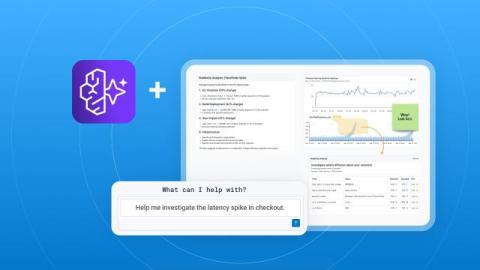
Cloud costs don’t grow quietly. They spike, drift, and surprise teams at the worst possible moments, usually when someone finally opens a dashboard. While cloud cost management tools are powerful, getting quick answers often still means navigating multiple views, applying filters, exporting reports, and looping in the right people. But what if cloud cost analysis worked more like a conversation?

Secure OAuth is easy to demo and hard to operate at scale

Most teams think about OAuth the same way they think about logging. It is necessary, familiar, and supposedly solved. Then it hits production. Suddenly, it is not just one authentication flow. It is a complex web of two or more applications, multiple environments, cookies, redirects, secrets, and route boundaries. The uncomfortable truth is that OAuth security is not just an implementation detail. It is an operational system, and that system is only as strong as the platform it runs on.