Operations | Monitoring | ITSM | DevOps | Cloud

The latest News and Information on Cloud monitoring, security and related technologies.

We're Past Human-Scale Operations. Here's Why.

Ever been on a 100-person P1 call where everyone says, “It’s not us”? That’s not a people problem. It’s a broken operating model. More tools. More data. More teams. And somehow… slower resolution. This is what happens when observability is fragmented across silos. Each team has data, but no one has shared truth—and human-scale operations can’t keep up with modern IT complexity. This clip breaks down why the old model no longer works.

Stateful Vs. Stateless Applications: What's The Difference (And Why It Matters)

Think of a stateful application like a conversation with a barista who remembers your order every time you walk in. They know what you had yesterday, how you like it prepared, and what you’ll probably want next. That memory makes the experience smoother, but it also means that if that barista isn’t around, your experience can break down entirely. A stateless application, on the other hand, is similar to ordering from a self-service kiosk.

Faster, compliant delivery on regulated cloud with Upsun and IBM Cloud for Financial Services

We are continually enhancing our offering to support enterprises looking to modernize without the pain of modernization. We partnered with IBM to bring our highly flexible cloud application platform to the IBM Cloud Marketplace to give financial service organizations a cloud option that meets both workload and organizational requirements.

Gemini Cost Per API Call in 2026: What You'll Actually Pay (And How to Control It)

On paper, Gemini pricing looks straightforward. You pay per token. Input tokens cost one amount, output tokens cost another, and different models come with different rates. But once Gemini is wired into a production SaaS product, that simplicity disappears. Fast. That’s because token usage compounds across context, retrieval, and output — not across requests. The same “API call” can cost pennies in one feature and dollars in another.

Webinar (Jan 15 2026): Take Back Control of Your Infrastructure (feat. nvisia)

Learn how leading teams are reducing complexity, controlling costs, and building resilient environments with modern private cloud patterns.. What we covered: If you’re evaluating private cloud, hybrid infrastructure, or looking to take back control of your infrastructure in 2026, this session provides a clear, actionable starting point. Reach out to our team to learn more today!

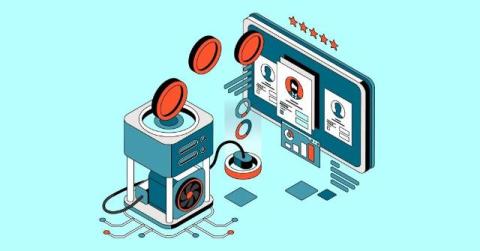
AI Hosting: The Colocation vs. Cloud Dilemma for Your Next Project

Organisations running AI workloads, like banks training fraud detection models, hospitals testing diagnostic tools, or manufacturers using predictive analytics, all face the same problem: hosting them is costly and resource-intensive. They require dedicated GPUs running non-stop, vast amounts of data moving in and out, and far more power and cooling than a typical IT system.

From Trough to Traction: 10 Real-World Lessons in Cloud and AI Efficiency

When CloudZero CTO Erik Peterson joined the SourceForge podcast in January 2026, he didn’t just talk about cloud costs. He reframed them as a launchpad for innovation, survival, and competitive advantage. Whether he was describing the “trough of lost innovation,” the “freemium tax,” or why efficiency is the next frontier of engineering culture, Erik’s expert insights go beyond FinOps hygiene.

AI Anomaly Detection: Catch AI Cost Surprises Before They Kill Margins

Consider this: traditional cloud cost monitoring was like checking your fuel gauge once a month — after the trip was already over. That model worked when infrastructure scaled slowly. You provisioned resources predictably and paid for stable, linear usage. AI breaks that model. Today, AI costs behave like a high-performance engine with a hypersensitive throttle. A small input, like a prompt change or a single power user, can dramatically increase your fuel burn in seconds.

Why Cost-Cutting Usually Breaks Your Product (And What to Do Instead)

Reactive cloud cost-cutting leads to “Infrastructure Atrophy,” sacrificing performance and reliability for short-term savings. The 2026 solution is cloud cost optimization, leveraging scale-to-zero and pay-per-use architectures to eliminate idle waste without compromising product health.