Operations | Monitoring | ITSM | DevOps | Cloud

The latest News and Information on Cloud monitoring, security and related technologies.

Open source vs commercial AI: choosing the right path for your business

This blog is based on a presentation by Guillaume, Field Chief Technology Officer at Upsun, and Robert from Ilwiin Technology during the AI Action Summit. The original French presentation has been translated and edited for clarity and accuracy. The AI field is advancing significantly, presenting organizations with the question: Should they choose open-source or commercial AI models? This choice impacts everything from costs and data privacy to long-term business strategy.

Pepperdata Launches Optimization for AI Infrastructure, Delivers up to 30% Savings on GPUs

ATLANTA - November 10, 2025 - Pepperdata, the leader in Kubernetes resource optimization in the cloud and on prem, today announced the general availability of pepperdata.ai, a groundbreaking, automated optimization solution to reduce the cost of running AI workloads on GPUs. Attendees are invited to visit Pepperdata's booth at KubeCon and CloudNativeCon North America 2025 on November 11-13 at the Georgia World Congress Center in Atlanta, GA, to discover how Pepperdata helps organizations-including members of the Fortune Five-automatically maximize the efficiency and cost-effectiveness of their AI infrastructure and workloads.

CloudZero: Making Kubernetes Costs Transparent And Actionable

Kubernetes is now the backbone of modern software infrastructure, helping teams deploy, scale, and manage applications efficiently across clouds. But when it comes to understanding costs, Kubernetes remains opaque. Teams often can’t answer basic questions like: How do you solve the gap between engineering usage and financial visibility? CloudZero’s new Kubernetes capabilities are built to address this challenge.

Detecting an AWS Outage and DR Lessons

A few weeks ago, on 20th October 2025, AWS suffered a widespread outage in its US-EAST-1 region that affected a large number of customers globally. More than 1,000 apps and websites were impacted including major banks and popular games, streaming and social platforms such as WhatsApp, Snapchat, Fortnite and Pokémon Go.

Cloud Credits: The Hidden Lock-In Strategy Hyperscalers Use

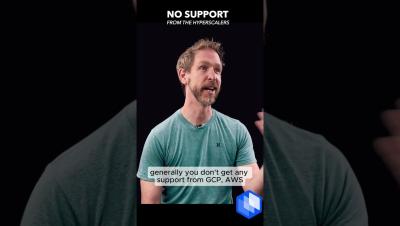
In this 5-minute clip from our recent webinar, Canopy's James Marks exposes the most dangerous side-effect of the cloud credit model: the migration loop. Instead of building their product, companies spend months hopping between vendors to chase new credits, falling into a cycle of constant, costly re-architecting. Simon Hansford provides clear advice for the best companies: build your architecture for portability on day one. Restrict proprietary features to maintain optionality and avoid the "entrenched phase.".

WordPress Vanilla vs Composer vs Bedrock - which wins?

WordPress powers over 40% of the web, but not all WordPress installations are created equal. Whether you're a solo developer, managing an agency, or overseeing hundreds of sites, the way you install and manage WordPress can make or break your workflow. In a recent live stream discussion, we dived deep into three popular WordPress installation methods: Vanilla, Composer-based, and Bedrock. Each approach has its merits, but which one should you choose? Let's break down the showdown.

Eliminate unnecessary costs in your Amazon S3 buckets with Datadog Storage Management

Cloud object storage powers a wide range of workloads, from AI training datasets to customer-facing media libraries. As your data grows into the petabyte scale, managing storage costs and ensuring reliability requires fine-grained visibility. You need answers to questions like: Which specific teams, services, workloads, or datasets are driving spend? Which data is cold and should be archived? What fixes will have the biggest impact on cost and performance?
Sponsored Post

Preparing for cloud failures: Monitoring strategies for distributed hybrid infrastructure

When AWS experienced its recent outage, the ripple effect was immediate. Critical workloads slowed, dashboards went blank, and many teams realized multi-cloud isn't automatically resilient. Cloud-level failures are inevitable due to the interdependent components and complex IT architecture. The recent AWS disruption reminded many teams that the cloud isn't a magic uptime guarantee. Even the most mature providers can-and do-experience large-scale service interruptions.