Operations | Monitoring | ITSM | DevOps | Cloud

The latest News and Information on Containers, Kubernetes, Docker and related technologies.

Meet Elemental: Cloud Native OS Management in Kubernetes

Wouldn’t it be great if Rancher could provision and manage not only Kubernetes clusters but also the OS running on the cluster nodes? This is the goal we had in mind when we started working on Elemental. Elemental adds to Rancher the ability to install and manage a minimal OS based on SUSE Linux Enterprise technology, delivered and managed in a fully cloud native way. This simplifies the infrastructure (you only need a container registry) and day 2 operations.
Qovery Demo Day Summary - June 2023

Join us for a recap of the latest updates from Qovery Demo Day, held on June 29th, 2023! Our event provides insight into what we accomplished in the past month and what's to come while showcasing some exciting new features with a special guest: Hamza, Senior Solution Engineer at Doppler. From our new deployment and audit logs to parallelize build and deployment and demos, get ready for an exciting look at what's new with Qovery and what’s next! ✨

Qovery Demo Day June 2023

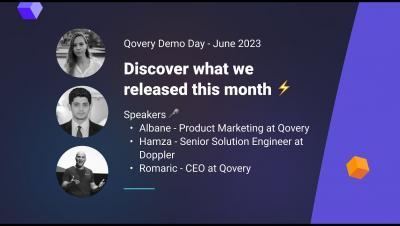
Qovery is a platform delivering Environments as a Service in your Cloud, where you can build, deploy and test in production-like environments. Qovery turns app deployment and environment provisioning on AWS a breeze. Developers can instantly spin up production-like environments and start shipping in seconds. Join Albane (Product Marketing at Qovery), Romaric (CEO at Qovery) and Hamza (Senior Solution Engineer at Doppler) to see in action what we worked on last month and what's next.

How to Successfully Transition from DevOps to Platform Engineering

Are you thinking about switching from platform engineering to DevOps? You're not alone. In order to remain competitive, many organizations are making this crucial change as the world of software development and operations continues to change. This article will discuss the reasons behind the transition, what it implies, and most importantly, how your organization may successfully manage the change.

How to Handle Kubernetes Resource Quotas

A containerized approach to software deployment means you can deploy at scale without having to worry about the configuration of each unit. In Kubernetes, clusters do the heavy lifting for you—they’re the pooled resources that run the pods that hold your individual containers. You can divide each cluster by namespace, which allows you to assign nodes (ie the machine resources in a cluster) to different roles or different teams. Resource quotas limit what each namespace can use.

Leveraging Calico flow logs for enhanced observability

In my previous blog post, I discussed how transitioning from legacy monolithic applications to microservices based applications running on Kubernetes brings a range of benefits, but that it also increases the application’s attack surface. I zoomed in on creating security policies to harden the distributed microservice application, but another key challenge this transition brings is observing and monitoring the workload communication and known and unknown security gaps.

The Cost of Upgrading Hundreds of Kubernetes Clusters

At Qovery, we manage hundreds of Kubernetes clusters for our customers on different Cloud Providers. For most non-operational people, it’s hard to understand what it means behind the scene, the amount of work it represents, pitfalls we can encounter, and associated complexity. Our customers are coming for several reasons, but they’re all happy to have Qovery management on the Kubernetes maintenance and upgrade stack. On our side, it’s too many clusters to manage them manually.

Cloud Expenditure - A Storm is Brewing

Expenditure on cloud computing services reached a mammoth 225 billion dollars in 2022. Companies start their cloud-native journeys with the best intentions and consume the many benefits including: But current cloud expenditure growth levels are unsustainable for many organizations and with 82% of organizations investing in FinOps staff it shows that cloud expenditure is top of mind in the c-suite.