The latest News and Information on Containers, Kubernetes, Docker and related technologies.
Over the last decade, containers have become an essential part of running infrastructure more efficiently. Containers enable productivity, automation, and cost-effective deployments. But there are different types of containers to consider, and this blog explains what Linux containers are, and how they differ from application containers.
With our latest releases of Epinio, we’ve focused on making both the setup and developer experience much more streamlined. We’ve looked at where users are having issues and removed many of the roadblocks. This reduced footprint also allows for more customizability and easier long-term maintenance. If you are not familiar with Epinio, it is an application development engine for Kubernetes that lets you go from code to URL in a single step.
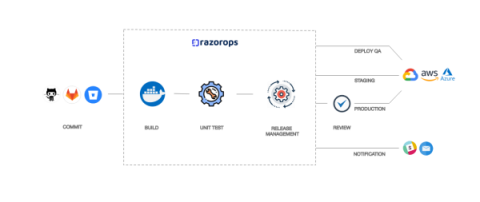
Continuous Integration(CI) is a software development practice where developers frequently merge the code and the changes in a central repository. The important goals of continuous integration is to find and resolve the bugs more quicker, improve the software quality, and reduce the time taken to validate and release new software updates. Continuous Delivery(CD), which is done on the top of Continuous Integration and includes the practice of automating the entire software release process and builds.
Kubernetes provides a set of primitives to run resilient, distributed applications. It takes care of scaling and automatic failover for your application and it provides deployment patterns and APIs that allow you to automate resource management and provision new workloads.