The latest News and Information on Containers, Kubernetes, Docker and related technologies.
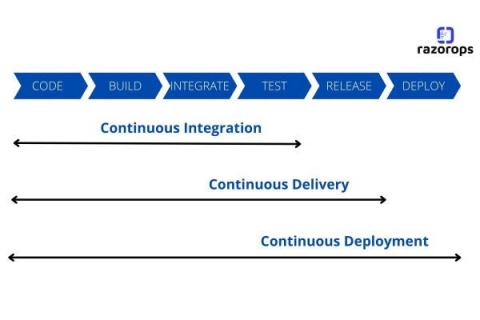
Continuous integration is a DevOps practice, where developers continuously integrate the code changes into a central repository. It most often refers to the build or the integration stage of the software release process.A continuous integration service helps to automatically build and run unit tests on the new code changes to find any errors instantly.
Getting started with software can be confusing – depending on the complexity of the software, of course. Despite the extensive documentation available for Charmed Operator SDK and Juju some just prefer to watch video material to start with. So, let’s take the opportunity to have a look at available tutorials and presentations available on the Internet.
Containers are no longer a thing of the future – they are all around us. Companies use them to run everything – from the simplest scripts to large applications. You create a container and run the same thing locally, in the test environment, in QA, and finally in production. A stateless box built with minimal requirements and unlike virtual machines – without the need of virtualizing the whole operating system.
At Civo we are always committed to listening to our customers and community. In this post, I would like to highlight some of the great work the team has done to make Civo Kubernetes a go-to choice for enterprises.
A month and a half ago we released ValidKube, our first OS project that fused the capabilities of three other popular OS tools (kubeval, kubectl-neat and trivy) in a single easy-to-use microsite. Using the microsite, any user could ensure the security and hygiene of their K8s YAML, with just a few clicks of the button, pretty much on the fly. ValidKube was born out of a straightforward concept and we were happy to see its user-friendly approach resonate almost immediately.
March 29th, 2022—Canonical, the publisher of Ubuntu, announces that Firmus, the Australian cloud infrastructure provider that is revolutionising data centre technology, has built its ultra-efficient and sustainable public cloud on Canonical’s Charmed OpenStack and Charmed Kubernetes.
Kubernetes is a rich ecosystem, and the native YAML or JSON manifest files remain a popular way to deploy applications. YAML’s support for multi-document files makes it often possible to describe complex applications with a single file. The Kubernetes CLI also allows for many individual YAML or JSON files to be applied at once by referencing their parent directory, reducing most Kubernetes deployments to a single kubectl call.