Operations | Monitoring | ITSM | DevOps | Cloud

The latest News and Information on Containers, Kubernetes, Docker and related technologies.

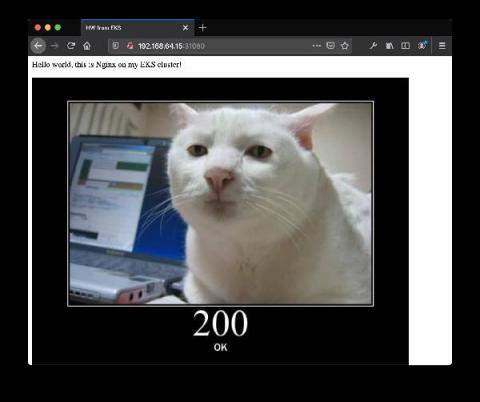
Use Amazon ECR Public and EKS-D to deploy LTS Docker Images

It’s re:invent season already, and we had exciting news to announce with Amazon this year. With all these remote sessions, what’s better than a quick lab to play with the new stuff? It’s starting to feel like Christmas already! We’re going to kill two birds with one stone (just an idiom, keep reading) and experiment with two of our latest announcements.
Introducing MinIO Support in Sematext

Sematext Logs is a Log Management-as-a-service. Think of it as your own central location for logs in the cloud. If you prefer or need to keep logs in your own environment instead of shipping it to the cloud Sematext Enterprise, designed to run on your own infrastructure, makes that possible. You can collect logs from any part of your software stack or infrastructure, IoT devices, network hardware, and much more.

Tapping Native Controls in Kubernetes to Protect Your Cloud-Native Apps

As companies adopt container technologies, they face a significant challenge - how do we secure this new attack surface? It’s an issue that you often see backlogged in favor of solving storage, networking and monitoring issues. Add on the challenge of educating the workforce on one of the fastest-growing open source projects to date, and it’s no wonder security has lagged as the primary focus for teams.

Enabling Secure Kubernetes Multi-Tenancy with Calico Enterprise

When you have different teams interacting with a Kubernetes cluster you need to think about the security, privacy, and observability challenges associated with multi-tenancy: How to provide each team with access to the specific resources they need, in a way that allows the team to be agile, without risking impacting other teams? In this session, we’ll explore the Kubernetes multi tenancy concepts and design patterns needed for successful enablement of multi-tenancy within your Kubernetes clusters using key capabilities of Calico Enterprise.

Kubernetes GitOps with Rancher Continuous Delivery

As the number of Kubernetes clusters under management increases, application owners and cluster operators need a programmatic way to approach cluster management. Rancher CD solves this by creating a git driven engine for applying cluster changes. Declarative code is stored in a git repo. As changes are committed to the repo, linked clusters are automatically updated. Gitops keeps all your clusters consistent, version controlled, and reduces the administrative burden as you scale.

Speed Up Development with Automated Kubernetes Deployments

Are you or your team currently looking for your next-generation architecture? Or perhaps are you already there, but looking for the best way to automate and manage it. In this blog, we’re going to talk about deploying Rancher environments using the power of env0. Rancher is a complete software stack for teams adopting containers.

Preventing malicious use of Weave Scope

Intezer and Microsoft reported on Sept. 9 that TeamTNT hackers are deploying Weave Scope in compromised systems as an auxiliary tool in their intrusions. Weave Scope is a legitimate and powerful tool to manage server infrastructure that, once deployed, makes it easy to control all resources. In this article, we will describe how this tool can be used maliciously, and how to add specific checks in your security set up to look for it.

Getting Up and Running with Calico for Windows

Calico is the only cross-platform CNI and networking and network security policy engine available today. It currently powers more than 150,000 known clusters across millions of nodes worldwide. Calico is also unique in supporting multiple dataplanes: Standard Linux, eBPF, and Windows HNS. Many organizations have .NET and Windows workloads that they have or eventually will modernize and deploy to Kubernetes. However, this may be uncharted territory for teams that are using Windows. This session is intended to inform and ease your adoption of Kubernetes on the Windows platform.