Operations | Monitoring | ITSM | DevOps | Cloud

The latest News and Information on Containers, Kubernetes, Docker and related technologies.

Kubernetes 1.21 available from Canonical

Today, Canonical announces full enterprise support for Kubernetes 1.21, from cloud to edge. Canonical Kubernetes support covers MicroK8s, Charmed Kubernetes and kubeadm. Starting with 1.21, moving forward Canonical commits to supporting N-2 releases as well as providing extended security maintenance (ESM) and patching for N-4 releases in the stable release channel.

Container Sprawl Is the New VM Sprawl

We are seeing organizations struggle to deploy and manage their Kubernetes clusters due to the increasing level of oversight required and the current lack of attention during the planning phase. Day 2 operations can be a “sink or swim” time for these organizations. Without effective Day 2 operations, organizations will face challenges scaling their IT environment and will not be ready to handle new threats to security and availability.

How Calico Cloud's runtime defense mitigates Kubernetes MITM vulnerability CVE-2020-8554

Since the release of CVE-2020-8554 on GitHub this past December, the vulnerability has received widespread attention from industry media and the cloud security community. This man-in-the-middle (MITM) vulnerability affects Kubernetes pods and underlying hosts, and all Kubernetes versions—including future releases—are vulnerable. Despite this, there is currently no patch for the issue.

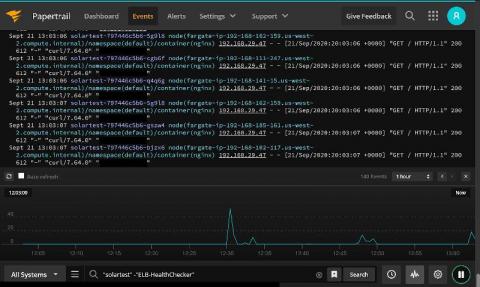
Kubernetes Logging Simplified - Pt 2: Kubernetes Events

In my first post in the Kubernetes Logging Simplified blog series, I touched on some of the ‘need to know’ concepts and architectures to effectively manage your application logs in Kubernetes – providing steps on how to implement a Cluster-level logging solution to debug and analyze your application workloads. In my second post, I’m going to touch on another signal to keep an eye on: Kubernetes events.

Analyze your GKE and GCE logging usage data easier with new dashboards

System and application logs provide crucial data for operators and developers to troubleshoot and keep applications healthy. Google Cloud automatically captures log data for its services and makes it available in Cloud Logging and Cloud Monitoring. As you add more services to your fleet, tasks such as determining a budget for storing logs data and performing granular cross-project analysis can become challenging.

When to use Docker on AWS Lambda, Lambda Layers, and Lambda Extensions

2020 was a difficult year for all of us, and it was no different for engineering teams. Many software releases were postponed, and the industry slowed its development speed quite a bit. But at least at AWS, some teams released updates out of the door at the end of the year. AWS Lambda received two significant improvements: With these two new features and Lambda Layers, we now have three ways to add code to Lambda that isn’t directly part of our Lambda function.

TeamTNT: Latest TTPs targeting Kubernetes (Q1-2021)

In April 2020, MalwareHunterTeam found a number of suspicious files in an open directory and posted about them in a series of tweets. Trend Micro later confirmed that these files were part of the first cryptojacking malware by TeamTNT, a cybercrime group that specializes in attacking the cloud—typically using a malicious Docker image—and has proven itself to be both resourceful and creative.

How to choose the best enterprise Kubernetes solution

While containers are known for their multiple benefits for the enterprise, one should be aware of the complexity they carry, especially in large scale production environments. Having to deploy, reboot, upgrade or apply patches to patches to hundreds and hundreds of containers is no easy feat, even for experienced IT teams. Different types of Kubernetes solutions have emerged to address this issue.