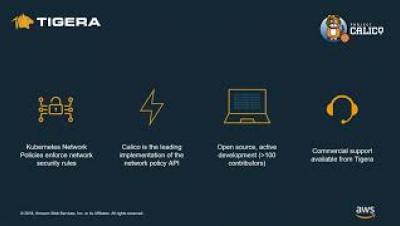
Self-Service Network Security for Kubernetes
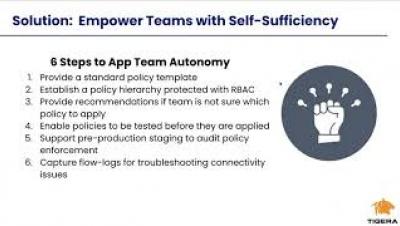
Learn how to empower your team with safe self-service network security for Kubernetes with Calico Enterprise.


The latest News and Information on Containers, Kubernetes, Docker and related technologies.
Canonical today announced full enterprise support for Kubernetes 1.19 spanning from public cloud to the edge, covering Charmed Kubernetes, MicroK8s and kubeadm. “As with all releases, Canonical is committed to fast following so that users benefit from the latest features, lifecycle operations and enterprise support in line with the upstream. With Kubernetes 1.19, MicroK8s and Charmed Kubernetes also bring enhanced security and carrier grade features.
As the cloud-native ecosystem continues to evolve, many alternative solutions are popping-up, that challenges the status quo of application deployment methodologies. One of these solutions that is quickly gaining traction is Unikernels, which are executable images that can run natively on a hypervisor without the need for a separate operating system.
Kubernetes upgrades are always a tough undertaking when your clusters are running smoothly. Upgrades are necessary as every three months, Kubernetes releases a new version. If you do not upgrade your Kubernetes clusters, within a year, you can fall far behind. Rancher has always focused on solving problems, and they are at it again with a new open source project called System Upgrade Controller. In this tutorial, we will see how to upgrade a K3s Kubernetes cluster using System Upgrade Controller.
In this blog post, we are going to explain how to monitor Harbor container registry with Prometheus metrics. Harbor is an open-source container registry, originally developed by VMware and now under the CNCF umbrella. Although many of us typically use hosted container registries such as DockerHub, Quay, ECR, GCR, or ACR, when you need a self-hosted registry, Harbor is a great choice. Harbor provides great features such as RBAC, replication, and image scanning.
It’s one thing to build a Kubernetes log management strategy that only needs to support Kubernetes. But most organizations don’t have that luxury. They have log management practices already in place for other types of platforms or infrastructure, and they need to extend them to support Kubernetes. How can you do that in an efficient way? Keep reading for tips on integrating Kubernetes logging data into your existing log management workflow without rebuilding from the ground up.
Sometimes technology partnerships are greater than the sum of their parts. That’s the case with two Swiss companies who have come together to deliver Kubernetes solutions to their customers. VSHN is Switzerland’s leading 24/7 cloud operations partner and first Kubernetes Certified Service Provider. amazee.io is an open source container hosting provider that offers flexible solutions built for speed, security and scalability.