Operations | Monitoring | ITSM | DevOps | Cloud

The latest News and Information on DevOps, CI/CD, Automation and related technologies.

Continuous integration for progressive web apps

Web and browser technology continues to advance, narrowing the gap between the performance of web and native applications. Features that were once exclusive to native applications can be implemented in web applications. This is due in part to the emergence of progressive web applications (PWAs). Web applications can now be installed, receive push notifications, and even work offline.

Episode 6: Mooving to... Real release strategies with Jake Laverty

Every product or application needs a release strategy. It’s how you can double check that everything in your deployment is appropriately tested, validated and verified. Having a standardized release strategy in place allows your team to follow a protocol and reduce the number of unknowns they must face in the product life cycle. However, there are a few considerations to make this critical process run smoothly.

Migration Guide - Jenkins to Razorops

Organizations are becoming more aware of the advantages of upgrading their continuous integration and continuous delivery (CI/CD) pipelines and moving them to the cloud, from lowering infrastructure costs to eliminating security threats. But carrying out a transfer is challenging, especially when a variety of platforms and technologies are involved.

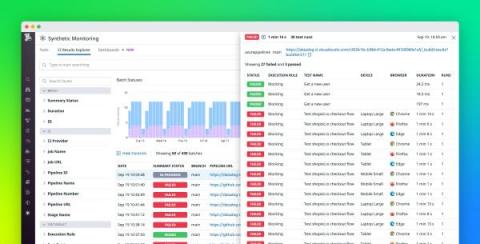
Automate incident response workflows with Eventarc and Datadog

Eventarc is a Google Cloud offering that ingests and routes events between GCP products, such as Cloud Run, Cloud Functions, and Pub/Sub, making it easy to build automated, event-driven workflows in complex environments. By taking care of event ingestion, delivery, authorization, and error handling, Eventarc reduces the development overhead that is required to build and maintain these workflows and helps you improve application resilience.

Simplify microservice governance with the Datadog Service Catalog

Moving from a monolith to microservices lets you simplify code deployments, improve the reliability of your applications, and give teams autonomy to work independently in their preferred languages and tooling. But adopting a microservices architecture can bring increased complexity that leads to gaps in your team members’ knowledge about how your services work, what dependencies they have, and which teams own them.

Tell the story of your incident with timeline curation

It isn’t the first time you’ve heard us say this and it won’t be the last: getting your post-incident process right is a game-changer. Being able to run effective debriefs and create useful postmortems helps us learn from our mistakes, respond better to future incidents and identify how we can build resilience in our product and teams. In short, it’s the thing the shifts the dial from just “fixing” to actually improving.

Linux "find" command - A Complete Guide

Linux users cannot just rely on GUI to perform various tasks in their system. Rather they need to have a good knowledge of the various commands available. One of the very useful commands for any Linux user is the find command. This command is used to locate files in one or more directories. Using this command, Linux users can set a specific search area, filter or find the files on the specific area or directory, and perform actions on the files that match the search.

Are your applications secured end-to-end?

Kubernetes has grown immensely, and its use within organizations is maturing. While Kubernetes’ growth is exciting, security concerns around applications deployed on Kubernetes are mounting. Red Hat performed a survey with hundreds of DevOps professionals, and it showed that 55% delayed application releases due to security issues.