Operations | Monitoring | ITSM | DevOps | Cloud

The latest News and Information on DevOps, CI/CD, Automation and related technologies.

Best Practices Guide for Kubernetes Labels and Annotations

Kubernetes is the de facto container-management technology in the cloud world due to its scalability and reliability. It also provides a very flexible and developer-friendly API, which is the foundation of its control plane. The effectiveness of the Kubernetes API comes from how it manages the Kubernetes resources via metadata: labels and annotations. Metadata is essential for grouping resources, redirecting requests and managing deployments.

Self Healing Kubernetes at the edge

As developers and businesses are shifting their attention to the edge, everyone wants to build their own edge clusters and manage them. However, building a highly available edge cluster is not easy. Kubernetes simplifies container deployments by abstracting the resource management details from the users, allowing them to deploy using standard CLI or templates.

What SREs Can Learn from Facebook's Largest Outage

Facebook’s October 2021 outage was the type of event that gives SREs nightmares: A series of critical business apps crashed in minutes and remained unavailable for hours, disrupting more than 3.5 billion users around the world and costing about 60 million dollars. As incidents go, this was a pretty big one.

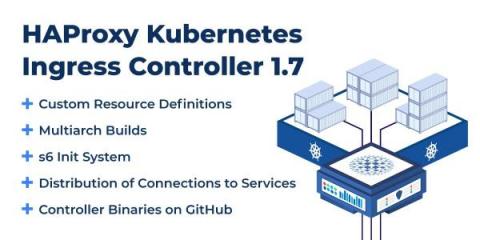
Announcing HAProxy Kubernetes Ingress Controller 1.7

We’re proud to announce the release of version 1.7 of the HAProxy Kubernetes Ingress Controller! In this release, we added support for custom resource definitions that cover most of the configuration settings. Definitions are available for the global, defaults and backend sections of the configuration. This promotes a cleaner separation of concerns between the different groups of settings and strengthens validation of those settings.

10 years of cloud infrastructure with Eric Brewer

In this video, Google Cloud Developer Advocate, Stephanie Wong, speaks with Google Fellow, Eric Brewer, about his experience building infrastructure, including Kubernetes, over the last decade at Google. You’ll get a window into what it was like to help propel Kubernetes into one of the largest open source projects today.

GitLens for Visual Studio Code, and its Creator Eric Amodio, Join GitKraken

For those of you who don’t know me, I’m Eric Amodio, creator of GitLens. I’m an innovator, leader, architect, and seasoned full-stack developer. I started developing GitLens way back in 2016 when I fell in love with Visual Studio Code and wanted to play with what was then newly released extension support. It all started with a simple question: could I add Git insights via CodeLens (hence GitLens) to any document? Which of course was yes, and a whole lot more.

What Is Kubernetes Pod Disruption?

Kubernetes pods are the smallest deployable units in the Kubernetes platform. Each pod signals a single running process within the system and functions from a node or worker machine within Kubernetes, which may take on a virtual or physical form. Occasionally, Kubernetes pod disruptions may occur within a system, either from voluntary or involuntary causes.

An intro to Infrastructure as Code

Infrastructure as Code (IaC) is the practice of recording the desired state of your infrastructure using a declarative language. In this article, I’m going to assume that your team is starting from scratch. Maybe some of your build process has been scripted, and maybe there is some manual testing and quality assurance work happening. Many readers will find that they are midway through the IaC adoption journey I’ll describe, or that they have missed some steps.

Mapping FluxCD Applications

Flux is a CNCF based open source stack of tools. Flux focuses on making it possible to keep Kubernetes clusters and cloud-native applications in sync with external resources and definitions hosted in environments such as GitHub. Implementing tools like FluxCD should enable you to achieve results such as: The results above can bring obvious benefits, and many teams are adopting FluxCD as their tool of choice for GitOps.