Operations | Monitoring | ITSM | DevOps | Cloud


The latest News and Information on DevOps, CI/CD, Automation and related technologies.

5 DevOps best practices to reinforce with monitoring tools
As part of a modern software development team, you’re asked to do a lot. You’re supposed to build faster, release more frequently, crush bugs, and integrate testing suites along the way. You’re supposed to implement and practice a strong DevOps culture, read entire novels about SRE best practices, go agile, or add a bunch of Scrum ceremonies to everyone’s calendar.
JFrog CLI Plugin: build-report

Monitor Red Hat Gluster Storage with Datadog
Red Hat Gluster Storage is a distributed file system, built on GlusterFS and operated by Red Hat for Linux environments. With its focus on scalability, low cost, and deployment flexibility across physical, virtual, and cloud-based environments, organizations use Gluster Storage in a variety of high-scale, unstructured data storage applications.
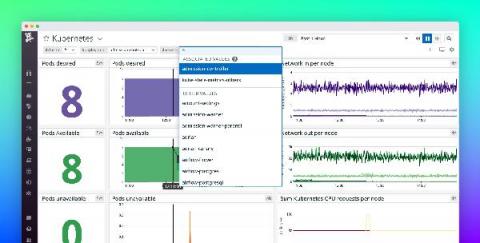
Use associated template variables to refine your dashboards
Datadog dashboards provide a foundation for monitoring and troubleshooting your infrastructure and applications, and template variables allow you to focus your dashboards on a particular subset of hosts, containers, or services based on tags or facets. We’re pleased to announce template variable associated values, which can help you speed up your troubleshooting by dynamically presenting the most relevant values for your template variables.

AWS Lambda Container Image Support Tutorial
This is an example machine learning image recognition stack using AWS Lambda Container Images. Lambda container images can include more source assets than traditional ZIP packages (10 GB vs 250 MB image sizes), allowing for larger ML models to be used. This example contains an AWS Lambda function that uses the Open Images Dataset TensorFlow model to detect objects in an image.