Operations | Monitoring | ITSM | DevOps | Cloud

The latest News and Information on DevOps, CI/CD, Automation and related technologies.

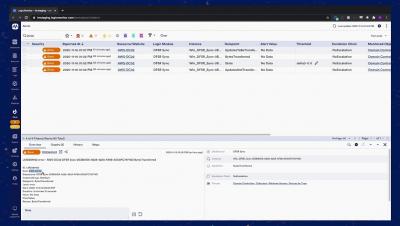
Put Your Logs to Work with LM Logs

Most IT professionals aren’t using their log data efficiently. The overwhelming volume of log data is unmanageable, and the information is difficult to decipher. LogicMonitor sees logs differently. LM Logs analyzes logs to ensure IT Operations teams have the right logs at their fingertips and offers a unique and unified approach to log analysis centered on algorithmic root-cause analysis.

Expand your monitoring reach with Datadog's enhanced Azure integration

Microsoft Azure is one of the fastest-growing cloud platforms in the world, offering a wide range of products for deployment, testing, and cloud storage. Datadog is committed to maintaining an extensible monitoring solution for Azure’s growing ecosystem that doesn’t require lots of manual configuration. That’s why we are excited to announce the following enhancements to Datadog’s Azure integration.

Distribute ROS 2 across machines with MicroK8s

Our simple ROS 2 talker and listener setup runs well on a single Kubernetes node, now let’s distribute it out across multiple computers. This article builds upon our simple ROS 2 talker / listener setup by running it on multiple K8s nodes. At the completion of this setup expect to have a ROS2 Kubernetes cluster running MicroK8s on three different machines. Applying a single configuration file distributes the ROS 2 workload across the machines.

Cybersecurity defenses for IIoT

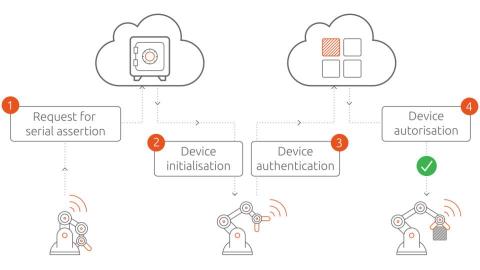
Cybersecurity attacks on industrial IoT solutions can have detrimental consequences. This is the case because IoT devices record privacy-sensitive data and control production assets. Therefore, demonstrable trustworthiness is prerequisite to IoT adoption in industrial settings. Fortunately, IT security is a mature field. Experts have identified classes of threats devices may be subject to. Let’s discuss these threat patterns and mitigation strategies in the IIoT context.

How to deploy the Elastic Stack on Red Hat OpenShift with ECK

Managing hundreds or thousands of containers has quickly become the standard for many organizations. With infrastructures growing more complex, we want every user to find value with Elastic (regardless of where or how they operate). We created Elastic Cloud on Kubernetes (ECK) — the official Operator — to simplify setup, upgrades, scaling, and more for running Elasticsearch and Kibana on Kubernetes.