May 2020, What's new? Custom domain, dotenv file, CLI improvements, Hasura Con 2020
Hello, In this Newsletter, we're happy to introduce some updates: Custom domain, dotenv file, CLI improvements, and new resources.


The latest News and Information on DevOps, CI/CD, Automation and related technologies.
Hello, In this Newsletter, we're happy to introduce some updates: Custom domain, dotenv file, CLI improvements, and new resources.
Logs are an invaluable source of information, as they provide insights into the severity and possible root causes of problems in your system. But it can be hard to get the right level of visibility from your logs while keeping costs to a minimum. Systems that process large volumes of logs consume more resources and therefore make up a higher percentage of your overall monitoring budget. Further, log throughput can be highly variable, creating unexpected resource usage and financial costs.
The release of Ubuntu 20.04 LTS was April 23, 2020. On the same day, Canonical added full support for Ubuntu Server 20.04 on all of the Raspberry Pis that we certify. Users can flash 20.04 to their Raspberry Pi knowing Canonical guarantees it will ‘just work’ and can make the most out of all of the new features added with 20.04. You can do this from our download page, or from the Official Raspberry Pi Imager tool.
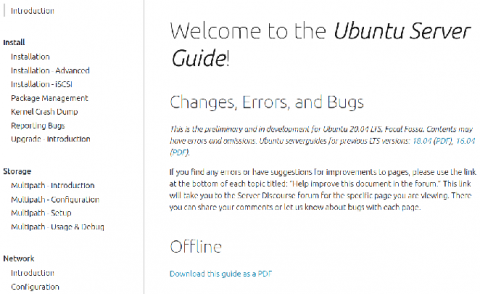
With the release of Ubuntu 20.04 LTS (Focal Fossa) the Ubuntu Server Guide has received a major set of updates and has moved to a new location on the Ubuntu website. The new location makes it much easier to read and contribute improvements. There is a link on the bottom of each page that points directly to the corresponding Discourse page which contains the source for each page of the Ubuntu Server Guide.
As Covid-19 restrictions and predictions march on unabatedly, people are starting to think about what may be long-lasting changes to industries. The tech industry is a mixed bag: it all depends on your perspective. Layoffs are becoming commonplace, especially in BtoC tech startups: Lyft and AirBnB recently announced massive cuts. The giants-- which include the usual suspects Amazon, Microsoft, Facebook, Google, Apple, Netflix--are faring remarkably well, as discussed in a recent New York Times op-ed.
Software developers, students, and a few sea creatures have spoken. GitKraken is the most popular Git GUI in the world—named the most used graphical user interface for Git in the 2020 State of the Software Development Report. You might, however, be on the fence; maybe you’re Git-curious, but not sure whether to ‘commit’ (sorry) to a GUI. After all, there are several out there. Which one should you choose?
Five worthy reads is a regular column on five noteworthy items we’ve discovered while researching trending and timeless topics. This week, we’ll take an in-depth look at multiexperience which came in second on the list of Gartner’s top 10 strategic technology trends for 2020 and it’s importance in an organization’s digital transformation.