Operations | Monitoring | ITSM | DevOps | Cloud

The latest News and Information on DevOps, CI/CD, Automation and related technologies.

Resolve Reels - Ep. 1 - The Agentic API Caller

What if you could go from request to result, instantly? No workflows to build. No APIs to chain. Just describe what you need. Resolve handles the rest. It selects the APIs, orchestrates the steps, and delivers the outcome in real time. This is agentic automation in action. Welcome to the Autonomous Enterprise. Watch now and see it in action#AgenticAI.

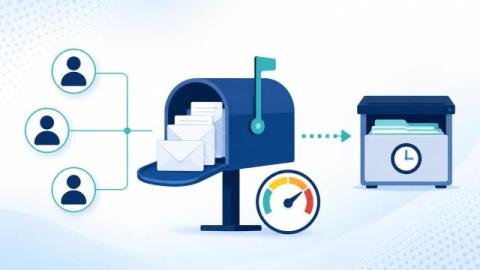
A Faster Way To Spot What's Slowing Down Your PostgreSQL Database

This is a guest post from Kellyn Gorman. Kellyn Gorman is a Database and AI Advocate and Engineer at Redgate She's the previous director of Data and AI at Silk, and the Oracle SME in Azure at Microsoft. With a robust background in cloud technology and a passion for promoting its merits and potential, I am thrilled to spearhead conversations and actions that help shape the future of this industry.

Agentic AI at Scale: Building the Kubex Agentic AI Platform

In the modern cloud infrastructure landscape, we don’t have a data problem; we have an actionable interpretation gap. Engineering teams are often drowning in metrics that describe a crisis without providing a clear path to remediation. Traditional FinOps, SRE, and DevOps work has become a reactive loop of dashboard-watching and manual firefighting.

How to Catch AI Code Mistakes Before They Reach Production

AI can write code fast, but it makes mistakes humans often don't. In this session from Ole Lensmar, CTO of Testkube, breaks down the real quality risks of AI-generated code and how engineering teams can build guardrails before those bugs hit production. What you'll learn: Common mistakes LLMs make (and which ones are unique to AI) Whether you're a developer leaning on AI to ship faster or a QA lead trying to keep up with the pace of AI-generated code, this talk gives you a practical framework for staying ahead of quality issues.

FinOps In Action Playbook For Engineering Personas

In 2025, many teams built strong FinOps foundations: These practices created visibility and control. Now it’s time to elevate. FinOps in Action is a three-part series focused on applying that foundation in real engineering scenarios. Each post highlights a different persona and shows how to move from visibility to operational discipline. Today, we focus on Engineering. Engineering teams influence cost through architecture decisions, scaling policies, and workload design.

Amazon Lex Pricing in 2026 Explained (And Practical Cost Saving Tips to Use Immediately)

If your SaaS product handles 1 million chatbot interactions per month, Amazon Lex alone could cost between $4,000 and $7,500. That range assumes current Amazon Lex V2 pricing of about $0.00075 per text request and $0.004 per speech request. Multiply the requests by the rate, and you’re done. Or are you? Conversational AI services rarely behave that neatly in production — and that includes AWS Lex. Amazon Lex is AWS’s conversational AI service for building chatbots.

Webinar Recap: Building The Finance Function For The Future

Women leaders from CloudZero, Campfire, and Preql AI sat down to talk about what it actually takes to modernize finance in 2026 — AI spend, smarter tooling, and the skills that matter now for finance practitioners and executives looking to manage cloud and AI spend in a rapidly changing and unpredictable financial environment. On March 19, 2026, CloudZero and Campfire co-hosted a virtual panel in honor of International Women’s Month, called Building the Finance Function for the Future.

The Great Cloud Repatriation: Why UK Businesses Are Bringing Data Home

More UK organisations are treating cloud location as a governance risk decision, because incidents and audits expose questions around jurisdiction, access and evidence. Recent research found that 87% of respondents plan to partially or fully move workloads away from the public cloud over the next two years, with 54% considering private cloud, 38% exploring greater reliance on their own data centres, and 36% assessing colocation.