Operations | Monitoring | ITSM | DevOps | Cloud

The Place Where Modern Operations & Technology Come Together

The latest News and Information on DevOps, CI/CD, Automation and related technologies.

Real Time Network Monitoring: Topology, NetFlow, SNMP
Interface counters tell you a port is busy. Bytes in, bytes out, errors, drops. That’s enough to know a link is saturated, but not enough to know which conversations are saturating it, which devices are involved, or how a problem propagates across your network. For that you’ve traditionally needed dedicated network performance monitoring tools, usually expensive, usually a separate console from the rest of your monitoring.
Why you should use Language Server Protocol (LSP) with Claude Code
Agentic coding tools like Claude Code can write, refactor, and debug across an entire codebase, but by default they read code as plain text, the way grep does. The Language Server Protocol (LSP) changes that: it’s the same code-intelligence layer an IDE uses, and wiring it into an agent lets it read code by meaning instead of by string match. The bigger the codebase, the more a wrong guess about a symbol costs, and the more that structural view pays off.

CloudZero Dimension Studio: A drag-and-drop UI at the foundation of AI ROI
The core of ROI is visibility. If you can clearly see … 1. What it costs to produce the thing you make, and 2. How much money it makes you … then calculating ROI is easy. But with AI, as with the cloud before it, getting that visibility is extremely challenging. Why? Because the cost data associated with each is inherently chaotic.

Shipped: Your Explorer setup, remembered
CloudZero Explorer now tracks your query history and lets you save up to 12 configurations and 10 favorite dimensions, so your most-used cost analyses are one click away.
How to Replace the SharePoint Preservation Hold Library (2026)
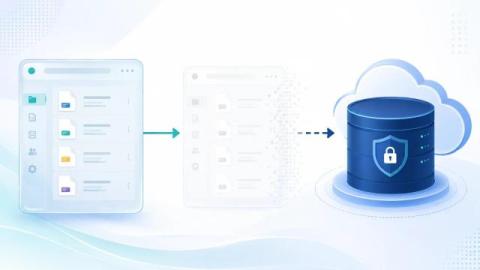
The Preservation Hold Library silently inflates SharePoint storage. Replace it with Squirrel Recycle Bin Capture for compliant retention in customer-owned Azure.

Isolating Risk: Why 5,000-Line PRs Are Dead (Even With AI)
The real unlock is flagging what actually needs human review, not shipping 5,000-line PRs and hoping for the best.

Canonical announces live kernel patching for Arm64
Canonical Livepatch now officially supports Arm64, further expanding its security patching automation capabilities. For the first time, Ubuntu on an Arm64 machine can apply critical kernel updates, without service interruption or rebooting. Starting with Ubuntu Core 26 for Arm64, and for Ubuntu Core 20 and onwards for AMD64 machines, a wider range of devices and cloud virtual machines can achieve timely vulnerability remediation through Canonical Livepatch.

Inside the Buyer's Decision: Governance, Trust, and Production-Ready Agentic AI
Why do so many AI pilots succeed in testing but fail to reach production? In this webinar, Resolve and IT leaders from RisePoint explore one of the biggest challenges facing enterprise AI adoption today: trust. While organizations are investing heavily in AI agents and automation, many initiatives stall before deployment due to governance concerns, compliance requirements, risk management, and lack of operational visibility.

The software supply chain threat landscape - 2026 and beyond
AI is accelerating both sides of the supply chain problem. Developers ship faster using it. Attackers use it to find vulnerabilities, create malicious packages, and automate social engineering.