Operations | Monitoring | ITSM | DevOps | Cloud

Cloud Storage in Content Operations: Why It Matters and 6 Best Practices To Follow

When implementing your content strategy, you'll need to be intentional about the technology you choose to manage the digital assets you create, share, and store. From creation and storage to accessibility and sharing of your digital assets, using cloud storage for content operations has a few rules you need to follow.

AWS AppSync as a Gateway to Your Cloud Infrastructure

When you build modern cloud-based systems, you usually realize quickly that you need to manage the access to your deployed resources. This is especially true with serverless systems, where you often end up with dozens of resources, even for medium-sized architectures. AWS offers a few services you can use to set up a central entry point to your infrastructure. Elastic Load Balancer, API Gateway, and AWS AppSync. This article will discuss AppSync, AWS’s managed GraphQL service.

How to develop a successful threat-hunting program

According to the 2021 Cost of Data Breach report, the average attack “dwell time”—the period between an attacker’s breach of an organization’s network and the point at which the organization finds out about it—is 287 days. During this time, the attacker can stealthily look to gather valuable information to steal or compromise data, incurring huge costs for affected companies.

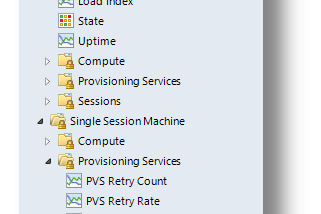
How to Scale with DX UIM's Monitoring Configuration Service, Part 1: Introduction

For today’s IT operations teams, the stakes keep getting higher and demands only intensify. The services these teams are responsible for managing play an increasingly critical role in the prospects of the business, which means optimizing service levels is an absolute imperative. Meanwhile, the environments in play only seem to keep getting larger, more complex, and more dynamic. Given these factors, monitoring is a task that keeps getting more vital and more difficult.

Real-Time Energy Management with InfluxDB and eSoftLink IoT Platform

Smart energy IoT platforms are empowering consumers to track energy usage and even control spend based on their next bill’s forecast. Yet eSoftThings, a specialist in the Internet of Things (IoT) and artificial intelligence (AI), set out to push smart energy management even further, for both consumers and utility companies, through its IoT platform eSoftLink.

Verify image signatures with GitHub Actions and KeylessPrefix

With the latest releases of Kubewarden v1.1.0 and the verify-image-signatures policy, it’s now possible to use GithubActions or KeylessPrefix for verifying images. Read our previous blog post if you want to learn more about how to verify container images with Sigstore using Kubewarden.

Alan Nance on the Importance of an Experience Optimization Framework

As the world continues on an accelerated course towards digital transformation, organizations have been placing an increased emphasis on the concept of experience. This is especially true within the world of IT service management, where being able to provide positive service experiences to customers and stakeholders is absolutely paramount.

6 Best Practices to Create a Data Center Naming Convention

Naming conventions for assets have a rich, engaging, and often hilarious history. While recently organizations have switched to standardized and more informative naming conventions based on location and function, earlier (and even now) IT departments have had a lot of fun naming assets for their data centers and servers. IT departments have often showcased their inner geek by using names of Star Wars or Star Trek characters for their assets.

FireHydrant Tasks provide turn-by-turn navigation during an incident

An incident has been declared and your runbook has fired. Everyone is gathered in your Slack channel, the tickets are opened, and roles are assigned. Now what? This is when most teams manually update status pages and kickoff investigation streams using a patchwork of tribal knowledge and supporting playbook documents.

How to Monitor PHP-FPM with Prometheus

PHP is one of the most popular open source programming languages on the internet, used for web development platforms such as Magento, WordPress, or Drupal. In addition to all PHP bases, PHP-FPM is the most popular alternative implementation of PHP FastCGI. It has additional features which are really useful for high-traffic websites. In this article, you’ll learn how to monitor PHP-FPM with Prometheus.