Here are the articles, videos, and tools that we’ve been excited about this July and August. We hope you enjoy these links, and we look forward to hearing what you’ve been reading in the comments or on the Interrupt Slack.
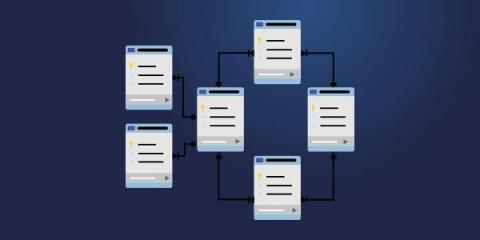
Information Technology (IT) has moved through many clearly defined eras. I don’t feel the need to list them all, but the latest one clearly is the move from discrete computers to virtualized software-configured environments, that we all colloquially call “the cloud”. And with each technological generation, we have improved the methods we use to integrate discrete modules of technology, and increased the level of automation.
It has been a while since I have been excited to write about encrypted tunnels. It might be the sheer pain of troubleshooting old technologies, or countless hours of falling down the rabbit hole of a project’s source code, that always motivated me to pursue a better alternative (without much luck). However, I believe luck is finally on my side.
Collaboration tools like Slack and Teams are here to stay. They’re very much inseparable from the distributed workforce that we all continue to find ourselves in. A robust set of integrations are then an essential part of today's monitoring and observability platforms. Feeding Catchpoint data into your support team via a Slack channel could be the difference between catching a disruption early or having to respond to a full-blown outage.
There’s something that humans and machines have in common, and no, it’s not the disappointment suffered by the final season of Game of Thrones, or, well, at least not only that. What we have in common is that we need protection. You know, animals need it too, and plants, but if you’ve gotten this far, it seems that you’re interested in computers, networks and all these pretty modern “geek” things, so today we’ll talk about that kind of protection.
Managed service providers (MSPs) need an IT help desk to address and answer the technical questions of clients. In the modern MSP environment, the IT help desk is the primary source of contact between customers and knowledgeable, responsive support personnel. Successful help desks are customer oriented and encourage clients to report IT incidents when they occur.
This has been quite the summer to remember as we continue to witness our customers achieve remarkable efficiencies through automation such as deep integrations with change pipelines to suppress alerts during maintenance windows and correlating alerts to create incidents with dynamic and evolving descriptions that dramatically improve Incident management processes.