Who Needs Site Reliability Engineers (SREs)?
Although every company can benefit from SREs, some need SREs more than others.


Although every company can benefit from SREs, some need SREs more than others.
Software is one of the most complex tools invented for practical use. One misplaced character can break an entire application. So, careful testing is an essential requirement before publishing any code. In this article, you will learn about two fundamental types of software testing, unit testing and integration testing, and how your team can implement them in your CI/CD pipelines to validate your code quickly and deliver new features to your users with confidence.
A key goal for any DevOps team is to shorten the software development cycle and provide continuous delivery of high-quality software. Instead of continuing to the next logical goal, continuous deployment, most companies stop here. Developed code reaches the testing phase automatically, then, successful testing triggers a manual acceptance step. Only then is the application deployed into production.
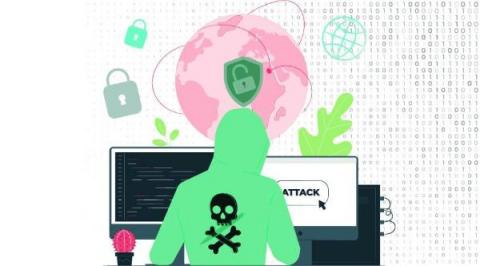
Software developers and manufacturers around the world are under attack by cybercriminals. It is not like we are in a time of the year in which they spread more and they barricade themselves in front of the offices, with their evil laptops seeking to blow everything up, no. They are actually always there, trying to violate information security, and in this article we are going to give you a little advice on the subject.
For the next interview in our series speaking to technology and IT leaders around the world, we’ve welcomed experienced CIO and lead AI expert at BagsID, Erik Van Breusegem to share his thoughts on the current state of AI.
The success of any organization, brand, product, or service hinges on customer sentiment. Positive customer experience leads to positive feelings. To deliver the best experience for every customer at scale, companies must address needs quickly, transparently, and proactively. That starts by connecting customer engagement, operations, data, people, and processes in a single system of action. With ServiceNow, customer issues and requests are broken down into tasks that can be automated.
Monitoring is a critical aspect of cloud computing. At any time, you need to know what’s working, what isn’t, and have the ability to respond to changes occurring in a given environment. Effective monitoring begins with the ability to collect performance data from across an ecosystem and present it in a useful way. So the easier it is to manage monitoring data across an ecosystem, the more effective those monitoring solutions are and the more efficient that ecosystem is.
They are like 5 stages of an incident: 1. Assess impact 2. Inform customers (statuspage) 3. Identify the issue 4. Mitigate the issue 5. Resolve the incident Then there’s followup and further work. Also important to note that (2) should be ongoing as you progress. Updating the status page should be done within reasonable periods – e.g. every 15-20 mins unless you specify otherwise.
What a difference a year makes. Each year, data center, lab, and edge sites become more complex, more distributed, and more difficult to manage. Managers must stay up to date on the latest trends and advancements in data center management best practices and technologies to maintain uptime, increase the efficiency of capacity utilization, and improve the productivity of people.