Operations | Monitoring | ITSM | DevOps | Cloud

Visual Link Analysis with Splunk: Part 3 - Tying Up Loose Ends

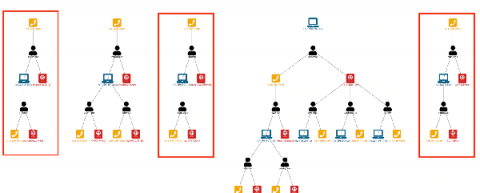
In my previous Link Analysis blogs, "Visual Link Analysis with Splunk: Part 1 - Data Reduction" and "Visual Link Analysis with Splunk: Part 2 - The Visual Part," I used techniques that work well when we have a controlled data set. However, as we know, real data can be messy. When analyzing links in fraud data, the data can be very noisy. Let’s say we want to use IP addresses for link analysis in the Splunk platform. It is not unusual for two people to share an IP address.


Hybrid cloud - everything you need to know

Hybrid cloud allows businesses to optimise their costs associated with cloud infrastructure maintenance. It also brings many other benefits, such as business continuity, compliance, better scalability and improved agility. According to the Forrester Wave: Hybrid Cloud Management, Q4 2020, hybrid cloud is an essential technology that every modern organisation is looking for and its adoption is only expected to grow in the following years.

ADS 11.2 - More than ordinary blacklists

Improve your security posture with community Indicators of Compromise and use reputation data to detect threats in encrypted traffic. On the digital battleground, it pays to stay on your toes, but there are ways to make the work easier. Flowmon ADS 11.2 brings you new and refined methods of avoiding known threats and learning from attacks carried out against others. Main news.

Avoid cost overruns: How to manage your quotas programmatically

One important aspect of managing a cloud environment is setting up financial governance to safeguard against budget overruns. Fortunately, Google Cloud lets you set quotas for a variety of services, which can play a key role in establishing guardrails—and protect against unforeseen cost spikes. And to help you set and manage quotas programmatically, we’re pleased to announce that the Service Usage API now supports quota limits in Preview.

5 Best Log Analyzer Tools for IIS Web Servers

An Internet Information Services (IIS) web server is a secure and advanced web server running on the Windows operating system. It’s used for hosting websites, applications, and services and sharing information with users over the internet or intranet. IIS web servers generate a massive amount of raw and unfiltered logs every day.

7 Tips to Improve End-User Experience

Nowadays, organizations can’t afford to ship software with a terrible end-user experience. Doing so is begging for your current customers to become former customers, since the competition is just a few clicks away. In today’s post, we’ll give you seven practical tips you can adopt right away to improve the end-user experience of your sites and apps so your customers remain your customers.

What Is ITSM (IT Service Management)?

For many businesses, one of their ultimate goals is to provide excellent services to their customers. But what about the employees facilitating the customer experience? Today’s employees are more reliant than ever on technology to help them do their jobs effectively, which in turn enables them to better serve external customers. And let’s face it, employees are customers, too. How can companies provide a positive employee experience with the technology they use daily?

5 Best Log Analyzer Tools for IIS Web Servers

An Internet Information Services (IIS) web server is a secure and advanced web server running on the Windows operating system. It’s used for hosting websites, applications, and services and sharing information with users over the internet or intranet. IIS web servers generate a massive amount of raw and unfiltered logs every day.