What Is the Purpose of Data Room Due Diligence
You can do due diligence through traditional means, but why? Modern VDRs can perfectly help you automate the whole process. Read more about it here.


Have you ever wondered how productive we could be if we could measure and monitor our brains and be alerted every time we overused them? While there’s no practical way to measure the performance of the human brain without expensive medical equipment, you can track metrics like these for your computer’s brain—its central processing unit (CPU). A device’s performance depends on the condition of its CPU; a device cannot function properly without a CPU.
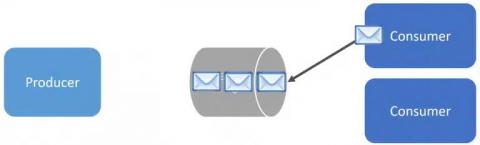
Do you want to use Kafka? Or do you need a message broker and queues? While they can seem similar, they have different purposes. I’m going to explain the differences, so you don’t try to brute force patterns and concepts in Kafka that are better used with a message broker.
Today, almost every IT department or MSP uses some form of mobile technology. Even though smartphones, laptops, tablets, and other mobile endpoints are incredibly useful for an organization, they can be difficult to manage. TechFunnel’s article on mobile devices in the workplace announces that one laptop is stolen every 53 seconds, while 7 million smartphones are lost every year.
The use of cloud computing by financial institutions has significantly increased in the last few years, a trend that was further accelerated by the COVID-19 pandemic. In the next few years, financial institutions will need to continuously balance the pressure to innovate quickly while managing risk and combating financial crime.
There are lots of organizations that struggle with keeping track of the many assets they own, where they are located, and who is using them! Some organizations utilize manual methods such as spreadsheets, pen & paper methods, etc. These methods are not effective as they are not accurate. When an organization does not have this information then asset misplacement, theft, and misutilization of assets increases.
Healthchecks.io recently got a new feature: run IDs. Run IDs are client-chosen UUID values that the client can optionally add as a “rid” query parameter to any ping URL (success, /start, /fail, /log, /{exitcode}). What are run IDs useful for? Healthchecks.io uses them to group events from a single “run”, and calculate correct run durations. This is most important in cases where multiple instances of the same job can run simultaneously, and partially or fully overlap.