Two major shifts are simultaneously taking place in the world of website monitoring: the acceleration of digital dependence has increased the need for high-performing websites and the frequency (and severity) of downtime outages continues to climb. These shifts have made it more important than ever for businesses of all sizes and industries to monitor uptime and page speed.
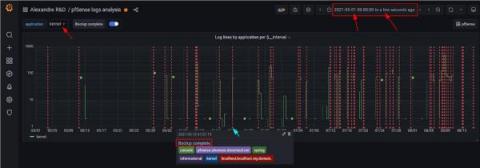
If you’re even the slightest bit familiar with how Grafana dashboards work, you’ve probably realized that the time range selector is one of the most important features. After all, when you’re using Grafana to visualize time series and logs, defining a time range is required for metrics and logs queries.
Jay V is one of the founders of Serverless Stack (SST), an open-source framework that makes it easy to build serverless apps. He spends his time trying to figure out what the future of the cloud will look like. And liking memes on Twitter.
You have to capture everything to investigate security issues thoroughly, right? More often than not, data that at one time was labeled irrelevant and thrown away is found to be the missing piece of the puzzle when investigating a malicious attacker or the source of an information leak. So, you need to capture every network packet.
If I had a penny for each time someone asked for a single pane of glass view across my 20 years in the application monitoring (now observability) space, and I would be retired instead of writing this blog. But, on the other hand, I’d be in big trouble if I paid out each time we failed we finished that ask.