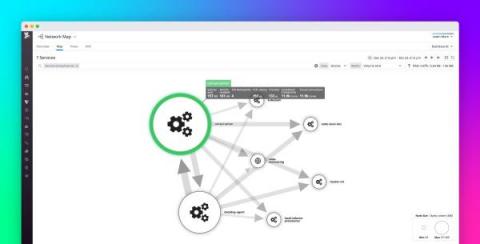
Consul is a service networking platform from HashiCorp that helps you manage and secure communication between microservices. You can use Consul with Kubernetes, and it supports on-prem, hybrid, and multi-cloud architectures. Consul service mesh provides a control plane which allows you to automate the management of traffic between your services via features like service discovery, DNS, load balancing, and routing.
Over the years, this biweekly letter has provided me with the opportunity to fully and fairly document just how much free time college students can have if they try. My college roommates tried really hard.
We maintain a highly optimised browser automation stack in order to provide the most stable environment for our customers to run their Selenium scripts in. Our goal is to deliver the best user experience for writing and maintaining a synthetic script and configuring the browser environments it runs in. The synthetic monitor data we produce is used for simulating website processes such as form-based authentication, eCommerce transactions, and regulatory checks.
You’ve probably seen the term AIOps appear as the subject of an article or talk recently, and there’s a reason. AIOps is merging DevOps principles with Artificial Intelligence, Big Data, and Machine Learning. It provides visibility into performance and system data on a massive scale, automating IT operations through multi-layered platforms while delivering real-time analytics.
I often have discussions with N-able partners who need help capturing data for either regular reporting or just to have when a customer asks for it. Often people will use a tool like BrightGauge to pull data from their RMM platform and generate dashboards and reports. However, these can be overly complex if you only need to capture the data so you have it and can act upon it. What I regularly recommend is that you create a monitoring script to capture just the data that is needed.
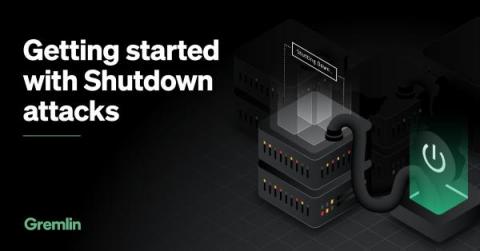
For many years, system uptime was the primary measure of reliability, especially when the most popular method of running software was on bare metal, on-premises servers. If a server was shutdown, rebooted, or otherwise became unavailable, downtime was expected until a system administrator could manually restart it.