Operations | Monitoring | ITSM | DevOps | Cloud

Dropbox vs iCloud: Which One to Choose in 2025

If you’re in the market for cloud storage, then Dropbox and iCloud may be high up on your list. If you’re an Apple user, you automatically get 5GB of free storage with your device. But the question is, should you upgrade your iCloud account, or go for another service like Dropbox? If you’re considering Dropbox vs iCloud, then this article is for you, as we will cover the following topics to help you make your decision.

Value Engineering Vs. Cost Cutting: The Value Paradox

For every CFO who’s ever asked, “Can we reduce engineering costs by 15%?” there’s a CTO quietly thinking, “But at what cost?” That tug-of-war plays out inside most SaaS companies. Finance wants to tighten budgets to protect margins, while engineering and product teams push for the resources to build, test, and innovate faster. The truth is, the teams that spend most efficiently — not necessarily the least — drive the highest returns.

How to Monitor AI Agents in Commerce Systems

Artificial intelligence (AI) isn’t just writing text or generating images anymore. It’s starting to make real-world decisions. Now, with agentic systems, we’re entering an era where AI models don’t just respond; they act autonomously, buying, booking, and negotiating on behalf of users. That may sound promising, but those of us in the trenches of reliability know that progress always comes with trade-offs. Make no mistake, this shift fundamentally changes how observability works.

Exploring why PostgreSQL 18 put asynchronous I/O in your database

For years, PostgreSQL relied on synchronous I/O, meaning that when the database needed data from disk, each read operation was a blocking system call. The database process would therefore pause and wait for the data retrieval before moving to the next task. Synchronous I/O works well for local storage, but our database needs have changed drastically since then, resulting in this architecture creating significant bottlenecks when storage has higher latency.

Densify Announces Kubex AI to Simplify and Democratize Resource Optimization

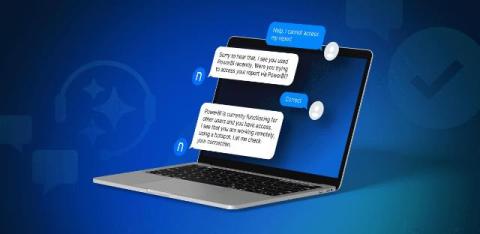
Densify has announced Kubex AI, a major leap forward in how organizations optimize complex Kubernetes and AI environments. This new solution combines verticalized AI for resource optimization with a conversational interface, empowering anyone—regardless of technical background—to access expert-level analytics and automation through simple, natural-language interactions.

Sync your Backstage catalog with Datadog IDP

Backstage is a popular open source framework for building internal developer portals (IDPs) used by organizations to aggregate service metadata and create a single source of truth for their software developers. However, data stored in the Backstage Software Catalog can quickly become siloed and inaccessible from monitoring tools such as Datadog.

The Hidden Side of AI: Building a Smarter Enterprise AI Solution

Everyone is talking about AI models, copilots, and large language engines. They’re certainly impressive, even transformative, but they’re only part of the story. The real power of AI depends on what’s happening behind the scenes. In enterprise environments, that hidden side of AI (the infrastructure, automation, and orchestration that make everything run) determines whether an AI strategy succeeds or fails. That’s where a smarter enterprise AI solution begins.

Certificate revocation is broken but we pretend it works

Last week, someone commented on my post about 47-day certificates: This perfectly captures our collective delusion that SSL certificate revocation works. You click a button, the certificate stops working. And why wouldn’t we believe that? Every CA has a big “Revoke Certificate” button right there in the dashboard. It must do something, right? Here’s the dirty truth: most revoked certificates keep working.

Introducing Network Destinations: ICMP Monitoring for Any IP

For those who don't know Obkio, we're a synthetic Network Performance Monitoring, Troubleshooting and Diagnostics platform. We help network teams identify, diagnose, and resolve performance issues across distributed networks, from remote offices to cloud applications. For years, we've focused on what we do best: agent-to-agent performance monitoring.