Operations | Monitoring | ITSM | DevOps | Cloud

Icinga Cube 1.1.0 is out!

As a little introduction for everyone who has not heard about the cube yet: The cube module is there to show statistics grouped by the custom variables that have been set for the hosts and services. They are then displayed in up to three dimensions for a quick overview to show the relations. The most prominent change is the addition of services: While it used to be only possible to have the hosts in a cube, the module has now been extended to provide full functionality with services as well.


The other half of software: what lurks between business logic

In 2016 I was the tech lead for a greenfield project completely devoid of legacy–I held the engineer’s promised land in front of me! I bit off as much new stuff as I could – serverless, event sourcing, functional programming, the whole gambit of cool. This is normally a very bad idea, but I had a team of strong engineers who had prior experience in this stuff, and we were ready to be technology pilots for the broader organization.

How No-Code Integrations Help Incident Management Scale

Do you think no-code is just another buzzword that with no real meaning? Well, maybe it is in some contexts. But if you want an example of how no-code solutions can matter in the real world, look no further than the context of incident management. Let us explain by walking through what no-code solutions mean in the context of incident management, how they work and how they can help teams scale and streamline their operations.

2019 Hurricane Season: Solidify a Business Continuity Plan With a Mass Notification Solution

Summer is typically synonymous with beach days, outdoor barbecues and fulfilling weekend getaways. Unfortunately, the summer months aren’t only about enjoyable moments and exciting vacations. It’s also tropical storm season, with higher risks of destruction, community displacement and business operation disruption. With this potential for human and business peril, it’s important for organizations to implement a business continuity plan, equipped with a robust communication strategy.

3X Growth is Quite a Milestone, And It's Only the Beginning

When you start a company – or a third company as is the case for Lee and me – you start with a problem statement, a product you believe in, and a lot of hope. This means when growth goes as planned or exceeds expectations, you shouldn’t be surprised. This is what is supposed to happen. Great Product + Market Opportunity + Great Team = Successful Business. Intellectually, I know all this, but it is still exciting to see it come to fruition.

Three Cybersecurity Trends for 2019

From online banking, insuring cars, and shopping, we are almost totally reliant upon the internet to complete daily tasks and make our lives easier. However, as technological advancements give us greater convenience, increase productivity, and provide greater access to whole new swathes of entertainment, consumers and businesses alike leave themselves at risk of cyberattacks against which robust defenses must be in place.

Logs to Monitor for Security Analytics

DevOps, security, and SOC teams find themselves constantly facing new cyber threats, ever-evolving attackers, and innovative attack vectors. Their challenges range from protecting employees’ mobile devices to preventing malicious parties from accessing an organization’s financial data or customers’ personal information.

Loki's Path to GA: Docker Logging Driver Plugin & Support for Systemd

Launched at KubeCon North America last December, Loki is a Prometheus-inspired service that optimizes storage, search, and aggregation while making logs easy to explore natively in Grafana. Loki is designed to work easily both as microservices and as monoliths, and correlates logs and metrics to save users money. Less than a year later, Loki has almost 6,500 stars on GitHub and is now quickly approaching GA.

How to Monitor Website Changes

Before, to know detect a website changed its content or not, you had to manually visit the website and check by yourself. This is a thing from the past! Tools such as Hyperping can send instant alerts in case of changes. One way is making sure your API or marketing site returns the expected content. Some servers return an expected status code (200, OK) but can often return the wrong content in the response body, whether it is HTML content or JSON.

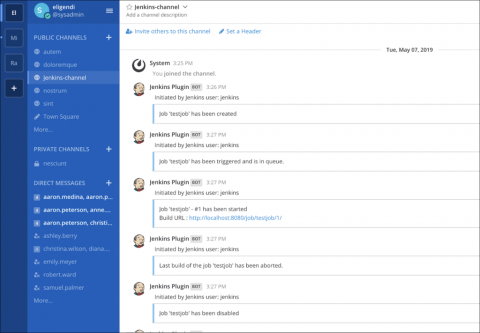
Build better workflows: Announcing the Mattermost DevOps integration set

No matter what tools your team uses, more effective collaboration results from sharing information and context, being able to react quickly, and automating repetitive processes. Development teams move faster when they can consolidate information in one central hub and can reduce context switching by switching less between different tools.