Operations | Monitoring | ITSM | DevOps | Cloud

The 3 Es of Diskless Kafka BYOC

Diskless Kafka splits storage from compute, delegating replication to cheap object storage and turning Apache Kafka Brokers into a stateless compute layer. It’s 100% Kafka, and 80% cheaper. But in the cloud, a cheaper underlying technology does not always mean you pay less. The cost varies significantly depending on the deployment model - SaaS or BYOC. In this article, we will learn why.

7 critical Active Directory metrics every IT admin should monitor

Across vast enterprise networks, Active Directory (AD) serves as the foundational layer for identity and access management. It's the critical service enabling user authentication, managing authorizations, and ensuring smooth operations across your network. Given its central role, any hiccup in AD can lead to widespread outages, security vulnerabilities, or frustrating user experiences.

Canonical delivers Kubernetes platform and open-source security with NVIDIA Enterprise AI Factory validated design

To ease the path of enterprise AI adoption and accelerate the conversion of AI insights into business value, NVIDIA recently published the NVIDIA Enterprise AI Factory validated design, an ecosystem of solutions that integrates seamlessly with enterprise systems, data sources, and security infrastructure. The NVIDIA templates for hardware and software design are tailored for modern AI projects, including Physical AI & HPC with a focus on agentic AI workloads.

The Future of WAN Design Depends on Network as a Service (NaaS)

Megaport and AWS explore how Network as a Service (NaaS) transforms WAN design with cloud-native agility, on-demand provisioning, and GenAI-ready flexibility. Co-authored by: Rishi Katdare, Leader – AWS Core Networking & GTM, AWS Mokshith Kumar, Sr. GTM Specialist Solutions Architect – AWS Core Networking, AWS As enterprise architectures grow more distributed and cloud-native, traditional methods of building and managing Wide Area Networks (WANs) are reaching their limits.

Achieving Comprehensive Network Observability for VMware Cloud Foundation

Private cloud infrastructure adoption is accelerating rapidly. This move is driven by the ongoing “cloud reset” as leaders rethink their hybrid and multi-cloud strategies, seeking greater control, security, and flexibility for their IT workloads. As a matter of fact, leaders in 69% of organizations are considering repatriating workloads, and one-third already have.

Data points per minute in Grafana Cloud: What you need to know about DPM

If you’re working with metrics in Grafana Cloud, chances are you’ve come across DPM (data points per minute). It shows up in usage dashboards, invoice breakdowns, and occasionally pops up in Slack when your ingestion numbers start looking suspicious. DPM can also be seen in the Grafana Cloud billing and usage dashboard, which is available by default in every Grafana Cloud account. It helps you understand how much data you’re sending—and whether it’s more than you need.

Infrastructure Management: When to Pick Bare Metal or Virtualized Servers

Infrastructure management isn't about taking sides. Too often, teams get pulled into “X is better than Y” debates that miss the bigger picture: your compute stack should serve your needs, not industry hype. A common decision point in the past has been the choice between bare metal or cloud hyperscalar virtualization. Nowadays, the answer isn't 1 or 0.

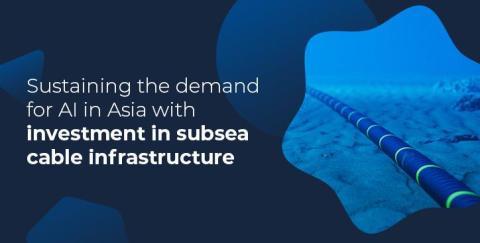
Sustaining the demand for AI in Asia with investment in subsea cable infrastructure

Across the Asia Pacific region significant investment is going into new subsea cable infrastructure that will help sustain the long-term demand for AI. We’ve written a lot on this blog about the impact of AI on networks and how AI workloads require low latency, high-capacity data transfer. This in turn puts more pressure on existing network infrastructure and in particular subsea cable systems - which provide the global backbone for cloud platforms and data centres.