Operations | Monitoring | ITSM | DevOps | Cloud

Optimizing On-Call for Incident Management: Preventing Team Burnout with Rootly On-Call

Rootly On-Call streamlines incident management with automated scheduling, noise reduction, and centralized documentation. It mitigates on-call fatigue with features like flexible overrides, shift visibility, and shadow rotations, enhancing team well-being and preventing burnout.


Application observability: Maximizing uptime and performance

In this blog post, we'll dive into the critical role of application observability in maintaining optimal performance and uptime. We'll explore how it works, why it's essential, and how it transforms challenges into opportunities for growth and improvement. So, if you're looking to elevate your application's performance and reliability to new heights, you're in the right place.

Top 3 Data Removal Tools for Ultimate Cyber Hygiene

Every click, search, and download leaves a trace. Scary, right? Or do you not think about it until you’re part of a data leak? It’s probably the second one. Yet, our digital footprint is something we should all focus on. In 2023, IT Governance studies showed 8,214,886,660 records of data breaches. And that’s only the ones logged on record. There will be more than that. It’s called cyber hygiene, and data removal is one essential part of it if you spend your days online.

NoSQL Databases: The ultimate Guide

Today, many companies generate and store huge amounts of data. To give you an idea, decades ago, the size of the Internet was measured in Terabytes (TB) and now it is measured in Zettabytes (ZB). Relational databases were designed to meet the storage and information management needs of the time. Today we have a new scenario where social networks, IoT devices and Edge Computing generate millions of unstructured and highly variable data.

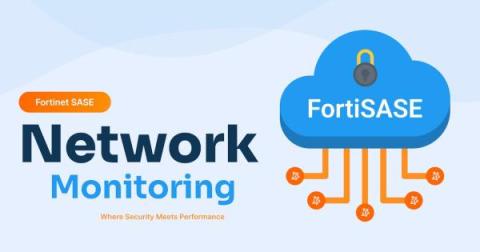
Mastering FortiSASE: Your Ultimate Guide to Proactive Network Monitoring for Fortinet SASE Solution

As organizations embrace distributed work environments and cloud-based applications, the need for secure, agile, and high-performing networks has never been more pressing. That’s where SASE comes in! Secure Access Service Edge (SASE) networks converge networking and security functions into a unified cloud-native platform, making them extremely popular for large enterprises nowadays.

Scanning the Edge: Expand Your Visibility to New Heights

Data is born at the edge, and the traditional approach is to collect it, then ingest it into one or more systems of analysis — or at least as much as you can afford to. And now the deep dive analysis begins. This might be the perfect solution for some datasets, but what about all the other data being collected on the edge? All the logs, metrics, and state information you seldom (if ever) retrieve?

Nexthink: Innovation from the Swiss Alps - a Pioneering Proactive IT Solution

Near Lausanne, at the heart of the Swiss Alps where innovation meets tradition, Nexthink is developing a ground-breaking proactive IT solution. Founded in the early 2000s at EFPL’s Artificial Intelligence Laboratory, Nexthink opened its first offices at Lausanne and quickly gained global recognition for its efforts to optimize IT based on the user perspective and to proactively enhance the IT experience – and the working life – of workforces everywhere.

What is Cloud Connect: A beginner's guide to connecting

Cloud Connect offers a secure, reliable, dedicated connection between your organisation’s IT infrastructure and the cloud computing services it uses. It provides simple, seamless access to the cloud. If your organisation uses cloud applications, Cloud Connect is a technology you should seriously consider. To help you with that, here we explain what Cloud Connect is, how it works, and the benefits it could offer you.

IT Directors - Are You Blind to this Silent Productivity Killer?

Hybrid work models have taken center stage as the new norm for global enterprises, and Microsoft Teams has become the leading collaboration platform to keep hybrid and remote teams connected and collaborating. However, as return to office has grown, the Teams user experience in the office hasn’t been as solid as it was for many employees at home, with friction in the user experience resulting from in-office network constraints.