When an incident occurs, every second counts. On-call staff need to quickly get all the relevant information in front of them in a way that’s easy to digest so they can more successfully investigate the issue and communicate with relevant stakeholders.
Prompt engineering is the practice of crafting input queries or instructions to elicit more accurate and desirable outputs from large language models (LLMs). It is a crucial skill for working with artificial intelligence (AI) applications, helping developers achieve better results from language models. Prompt engineering involves strategically shaping input prompts, exploring the nuances of language, and experimenting with diverse prompts to fine-tune model output and address potential biases.
In this livestream, Ahmed Kira and I provided more details about the Cribl Stream Reference Architecture, which is designed to help observability admins achieve faster and more valuable stream deployment. We explained the guidelines for deploying the comprehensive reference architecture to meet the needs of large customers with diverse, high-volume data flows. Then, we shared different use cases and discussed their pros and cons.
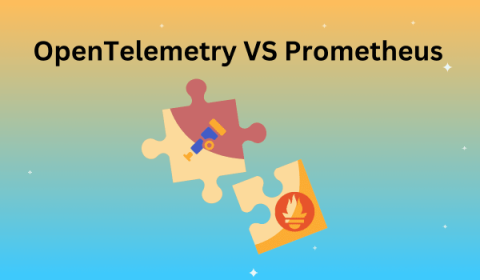
OpenTelemetry vs Prometheus is a commonly searched and debated topic in the Observability and monitoring space. While both platforms are widely used in software and infrastructure management today, most people don’t understand the difference between the two. Both platforms stand as robust tools in the realm of observability, each offering unique capabilities. OpenTelemetry offers a uniform approach for gathering, instrumenting, and exporting telemetry data.
When an incident occurs, every second counts. On-call staff need to quickly get all the relevant information in front of them in a way that’s easy to digest so they can more successfully investigate the issue and communicate with relevant stakeholders.
With notable advancements in Artificial Intelligence (AI) within cybersecurity, the prospect of a fully automated Security Operations Center (SOC) driven by AI is no longer a distant notion. This paradigm shift not only promises accelerated incident response times and a limited blast radius but also transforms the perception of cybersecurity from a deterrent to that of an innovation enabler.