Operations | Monitoring | ITSM | DevOps | Cloud

Reliably receive a call when an organ donor is matched

Within the broader context of organ transplantation, time is of the essence. Lives hang in the balance, waiting for that life-changing call announcing a matched donor organ. For organ transplant recipients, the waiting game is often a test of patience and resilience. However, with the advent of modern technology, a solution has emerged to alleviate this uncertainty – OnPage.


Building a Scripted Event Collector With Cribl Stream

Cribl Stream provides a robust HTTP REST collector, with many features and options. Still, there are endless combinations that vendors can provide in their API endpoints. Sometimes you may need to take more extreme measures to unlock data stashed begin the API entry point. No worries! Cribl also allows you to run a script to collect that data, and can even help you scale it. In this blog post, we’ll cover how I completed this task for a recent interaction using Qualys.

Cloud storage for enterprises

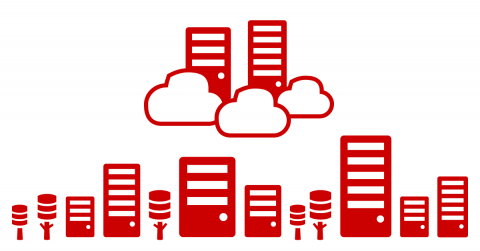
Any data-centric organisation faces the prospect of data growth at some point in their existence; it is estimated that more than 2,500 Petabytes (PB) of new data is created every day. While only a few organisations will ever have to deal with that kind of scale, it is important to plan ahead for your own organisation’s growth. Legacy appliance-based storage systems where hardware and software are closely coupled can be expensive to maintain, expand, and difficult to operate.

Into the Labyrinth: Revealing the Mantic Minotaur

Few creatures from mythology have captured the imagination of mankind quite like the legendary Minotaur. A half-man, half-bull behemoth that is said to guard the halls of the impenetrable labyrinth of Crete. The ancient sagas stated that only the bravest of warriors would be able to match its incredible strength and escape its mystifying maze.

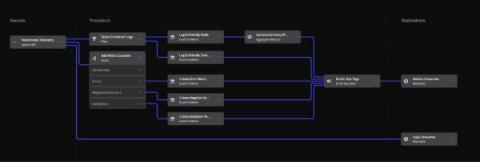
Understand Your Kubernetes Telemetry Data in Less Than 5 Minutes: Try Mezmo's New Welcome Pipeline

Most vendor trials take quite a bit of effort and time. Now, with Mezmo’s new Welcome Pipeline, you can get results with your Kubernetes telemetry data in just a couple of minutes. But first, let’s discuss why Kubernetes data is such a challenge, and then we’ll overview the steps.

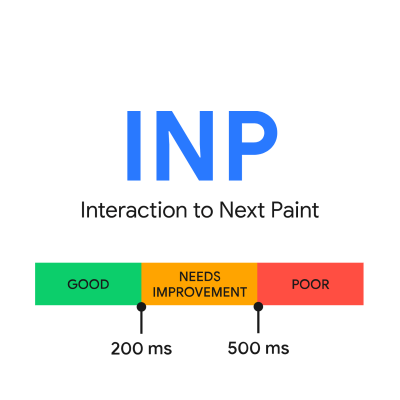
INP - New Metric in Core Web Vitals

In 2020, Google introduced Core Web Vitals (LCP, FID, CLS), officially making them ranking metrics affecting search engine rankings in February 2022. As a next step, in April 2023, Google announced the retirement of several ranking systems (Page experience, Mobile-friendly, Page speed, Secure sites), increasing the impact of Core Web Vitals on rankings.

The Benefits and Challenges of Managing Hybrid Estates

More and more organizations are migrating their data to the cloud but the majority are likely to end up managing hybrid estates, with some data managed through a cloud provider and some managed locally. This leads to some unique issues, especially around monitoring and services. If the objective of migrating to the cloud is simply to implement virtual machines (VMs) in a different location than you traditionally do, there will be fewer challenges.

InfluxData Announces InfluxDB Clustered to Deliver Time Series Analytics for On-Premises and Private Cloud Deployments

SAN FRANCISCO – September 6, 2023 – InfluxData, creator of the leading time series platform InfluxDB, today announced InfluxDB Clustered, its self-managed time series database for on-premises or private cloud deployments. With the release of InfluxDB Clustered, InfluxData completes its commercial product line developed on InfluxDB 3.0, its rebuilt database engine optimized for real-time analytics with higher performance, unlimited cardinality, and SQL support.

Announcing InfluxDB Clustered: InfluxDB 3.0 for Self-Managed Environments

Today, we’re excited to announce InfluxDB Clustered, our latest product developed on the InfluxDB 3.0 product suite. InfluxDB Clustered is the evolution of InfluxDB Enterprise, our popular self-managed product for large-scale time series workloads. For enterprises, the performance leap from InfluxDB Enterprise to InfluxDB Clustered is orders of magnitude higher with significant improvements across analytics, storage, and costs.