Operations | Monitoring | ITSM | DevOps | Cloud

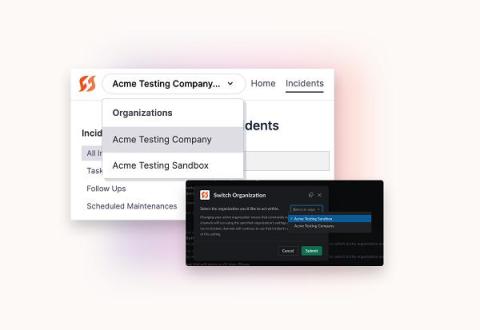
Multi-Org takes FireHydrant for enterprise to the next level

Too often, complexity means confusion — and confusion is your worst enemy when it comes to efficient incident response. We recently found that poor incident management practices (like confusion about what to do or how to escalate an incident) can cost companies as much as $18 million a year.


The Complementary Power of RUM & Internet Synthetic Monitoring

User expectations are at an all-time high, and any performance hiccups can lead to frustrated users and lost business opportunities. To get real-time insights into their digital assets and succeed in this competitive landscape, businesses need Internet Performance Monitoring (IPM) that incorporates both synthetic and Real User Monitoring (RUM). RUM and synthetics are two powerful tools that, when used in tandem, offer a comprehensive view of performance and user experience.

Skiff Competition: Discover a Cost-Effective and Secure Alternative to Skiff

Skiff is a cloud storage platform with the same goal as many alternative cloud storage services: to provide a secure and private cloud for individuals and businesses. Skiff hopes to provide alternatives to Big Tech companies such as Google Drive and Dropbox to give users full ownership of their files with end-to-end encrypted services. As well as cloud storage, Skiff has expanded its services to other products that encrypt your data, including email, calendar, and other mobile apps.

Should You Reload or Restart HAProxy?

Managing your load balancer instances is important while using HAProxy. You might encounter errors, need to apply configurations, or periodically upgrade HAProxy to a newer version (to name a few examples). As a result, reloading or restarting HAProxy is often the secret ingredient to restoring intended functionality. Whether you’re relatively inexperienced with HAProxy or you’re a grizzled veteran, understanding which method is best in a given situation is crucial.

Incident Priority Matrix: From Chaos to Clarity

IT leaders often find themselves under pressure to support business outcomes while also trying to manage help requests. An incident priority matrix makes the incident management process much more seamless. It helps companies handle priority incidents within reasonable resolution times while ensuring other concerns are met. In this blog post, we delve deep into the concept of the Incident Priority Matrix, its significance, and how it can transform your incident management processes.

Resolve Automation Capabilities Framework: From Tactical to Strategic End-to-end Automation

All business eyes seem to be focused on the current challenges of an unsteady economic environment, and organizational leaders are working to figure out the best plan to overcome them. Leaders have their own collection of key initiatives as no two companies are the same. Most commonly; however, they want to double capacity and productivity, cut costs, enhance customer experiences, and future-proof their organizations.

Do you have a Cloud Exit Strategy?

In the modern digital age, the allure of cloud computing has been nothing short of mesmerizing. From startups to global enterprises, businesses have been swiftly drawn to the promise of scalability, flexibility, and the potential for reduced capital expenditure that cloud platforms like Azure offer. Considering the diverse Azure VM types and the attractive Azure VMs sizes, it’s easy to understand the appeal.

TPM-backed Full Disk Encryption is coming to Ubuntu

Full disk encryption, FDE, has long been an integral part of Ubuntu’s security strategy. Its mission is straightforward: to mitigate the risks of data breaches due to device loss and unauthorised access, by encrypting data while stored on the computer’s hard drive or storage device. For 15 years, Ubuntu’s approach to full disk encryption relied on passphrases for authenticating users.

Troubleshooting Spring Boot Microservices - A Real World Case Study

Today, I’ll cover Shift Left Monitoring: A Pathway to Optimized Cloud Applications and how left-shifted troubleshooting of Spring Boot code issues using observability tooling can avoid production issues, unnecessary costs and improve product quality. Shift-left is an approach to software development and operations that emphasizes testing, monitoring, and automation earlier in the software development lifecycle.

Welcoming new leadership at Cloudsmith - a note from Alan Carson

Alan Carson writes about his experience and journey with Cloudsmith, as new CEO Glenn Weinstein steps in as leadership. I heard something recently, that resonated, about success. In a simple (but not easy) three-step plan; success happens when the following three things align: A great example is, of course, Steve Jobs and Apple. The contrarian idea was that every single human would need a personal computer. He was proven right. And he executed expertly (with a few ups and downs obviously!)