Operations | Monitoring | ITSM | DevOps | Cloud


The latest News and Information on Log Management, Log Analytics and related technologies.

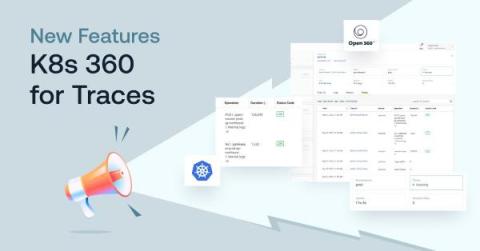
Tracing Your Steps Toward Full Kubernetes Observability
Kubernetes is one of the most important and influential technologies for building and operating software today because it’s so incredibly capable. It’s flexible, available, resilient, scalable, feature-rich and backed by a global community of innovators — that’s a pretty impressive list of intangibles to apply to any particular capability.

How to Build a ROI Plan for Cribl Stream
Getting your organization to invest in a new tool requires telling a story that helps decision-makers understand its benefits. In a recent webinar, our experts discussed how to define an ROI for Cribl Stream. They also shared a sample proposal you can use to craft the story you’ll tell to leadership, and gave some tips and tricks for justifying the purchase of these key tools for your business. Engineers and architects understand core technical problems better than anyone.

Cloud Migration Basics: A Beginner's Guide
Anomaly Detection in 2024: Opportunities & Challenges
Enterprises Realize Benefits from Migrating to Cloud with Splunk
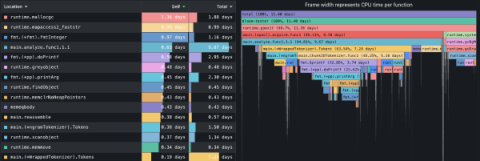
How continuous profiling improved code performance for a new Grafana Loki feature
Throughout the software development process, engineers can use a number of methods and tools to ensure their code is efficient. When using Go, for example, there are built-in tools, including those for benchmarking and CPU/memory profiling, to check how efficiently code will run. Engineers can also run unit tests to validate code quality.

ING's bold leap into the future: Building a global, cloud-based financial messaging system with Elastic
ING Group is a Dutch-based multinational banking and financial services corporation serving more than 38 million customers globally. It’s one of the biggest banks in the world, consistently ranking among the top 30 largest banks globally. At ING, our 20-year-old COBOL-based financial messaging system — which provides electronic instructions to enable financial transactions between banks and customers — is slowly becoming obsolete and difficult to integrate.

The Top 10 OpenSearch Plugins
OpenSearch is a powerful, open-source analytics and search engine that can be utilized to construct custom search solutions for a broad variety of applications, from websites to enterprise-level systems. It enables flexible search and indexing abilities, making it suitable for a range of uses, a great example of this is scalability. OpenSearch is designed for horizontal scalability, enabling organizations to input additional nodes to their cluster as data volumes and query loads increase.

Triangulate: Add Logs to Your Monitoring Mix
For many IT organizations, triaging or troubleshooting starts with assessing symptoms. As practitioners investigate the causal factors by answering each of the “5 whys,” logs are often where the actual root cause answers lie. This is even more true for issues related to configuration changes, change management, and security. However, diving into log data can be overwhelming as a first step due to the high volume and velocity of logs and missing context.