The latest News and Information on Monitoring for Websites, Applications, APIs, Infrastructure, and other technologies.
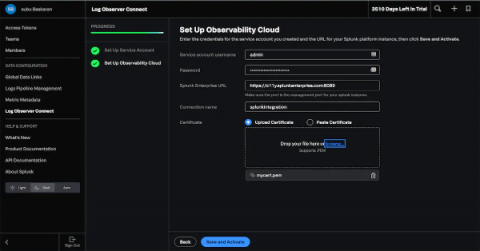
We are excited to announce that Splunk Log Observer Connect for Splunk Enterprise, previewed at.conf21, is now generally available! Log Observer Connect is a new feature that lets observability users explore the data already being sent to existing Splunk instances with Splunk Log Observer’s intuitive no-code interface for faster troubleshooting and root-cause analysis.
In this article, we will cover the basics of a Lambda function and its functionality in our every day digital lives. AWS Lambda, as we already know, is a compute service that allows you to run code without managing servers. AWS Lambda runs the code when it is needed, and it is automatically scaled. The code you execute on AWS Lambda is called Lambda function, and it can be considered, for better understanding, as a formula in a spreadsheet.
In the past, we’ve written about what instrumentation is and the insights it provides. Instrumenting your code generates telemetry that shows you how your system is performing, and whether your system is healthy. Like with most other companies, at Honeycomb we don’t write all of the code that runs in our systems.
Preventing data loss for data in motion is a challenge that LogStream Persistent Queues (PQ) can help prevent when the downstream Destination is unreachable. In this blog post, we’ll talk about how to configure and calculate PQ sizing to avoid disruption while the Destination is unreachable for few minutes or a few hours. The example follows a real-world architecture, in which we have.
Like any great technology, the interest in and adoption of Kubernetes (an excellent way to orchestrate your workloads, by the way) took off as cloud native and containerization grew in popularity. With that came a lot of confusion. Everyone was using Kubernetes to move their workloads, but as they went through their journey to deployment, they weren’t thinking about security until they got to production.
If you’re a person who works from home, you almost certainly have to deal with occasional internet connection issues. More often than complete outages, you’re likely dealing with occasional slowness. And you know from experience that any one of dozens of devices and services along the path can cause latency.
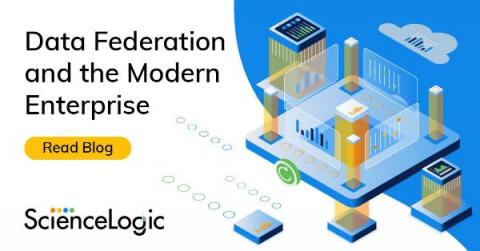
In our increasingly hyper-connected, data-dependent world, it can be difficult to keep track of where resources are, how to access them, and how to put data assets to work to run a more efficient and reliable enterprise. Traditional approaches to IT operations analytics are becoming outmoded as the sources and types of data grow more mobile, ephemeral, diverse and distributed.
Maintaining an endpoint, especially a customer-facing one, requires constant monitoring, whether using REST or GraphQL. As the industry has looked for solutions to build a more adaptive endpoint technology, it is also a must to monitor these endpoints. GraphQL and REST are two different technologies that allow user-facing clients to link to databases and platform logic. Both GraphQL and REST include monitoring techniques.