Operations | Monitoring | ITSM | DevOps | Cloud

The latest News and Information on Monitoring for Websites, Applications, APIs, Infrastructure, and other technologies.

A techy bedtime story: The tale of wizards, caves and how Serverless came to be

We’ve noticed interesting threads floating around the internet asking how would you explain serverless to a toddler. As it happens, we just turned three years old and to mark the occasion, we decided to take up the challenge and wrote a bedtime story, for serverless enthusiasts of all ages, about how serverless came to be, from the very beginning. It is a magical tale of the ingenious, life-changing journey that got us to a new universe called Serverless.
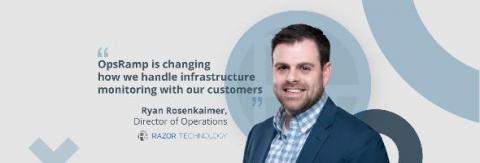

Partner Chat: Razor Technology

Ryan Rosenkaimer is Director of Operations at Razor Technology, a managed services provider (MSP) customer and partner of OpsRamp. Founded in 2004 and based in Philadelphia, Razor serves more than 300 clients in the greater Northeast and Mid-Atlantic regions. The company is using OpsRamp to deliver managed cloud services to its clients and also resells OpsRamp as a service.

Configuration Management - bringing infrastructure chaos under control

For IT teams it has never been an easy task to build and maintain an inventory of all the systems, software and hardware that organizations are reliant on to deliver their services and do something meaningful for the business with this information. As organizations grow they accumulate more and more asset and config data. Information inevitably ends up scattered across multiple, disconnected repositories; ITSM tools, service catalogs, software asset management systems, databases, spreadsheets etc.

ITOM podcast episode 1 is out! Learn the basics of VPNs to enable your remote workforce

The wait is finally over. The first episode of our weekly podcast series aimed to alleviate all your remote work hassles is out. The efficacy of remote operations depends on a robust virtual private network (VPN). VPNs help facilitate remote work by acting as a conduit between an organization’s remote workers and its private network. VPNs ensure a safe passage for the transmission of business-critical data and grants end users access to on-premises services to maintain operational continuity.

How Jacada DevOps Integrated Security into Observability

Watch the webinar to hear how Jacada:

  • Leverages open source technology to meet their observability, monitoring and security objectives
  • Deployed Logz.io’s Log Management solution to streamline logging and make it an easy and accessible component of their architecture, alleviating the workload placed upon the shoulders of the DevOps team
  • Relies on Cloud SIEM’s triggered security rules, dashboards and scheduled reports to gain full visibility into their risk environment

Loki 1.6.0 released: Metric query performance up to 10x faster, push logs from any client to Promtail, query language and LogCLI enhancements, and more!

Things have been busy with the Loki project! Once again, we waited too long between releases, and there are so many new things I won’t be able to list them all. But that won’t stop me from trying, so let’s get to it. For a change of pace, instead of listing interesting PRs, I’m going to talk through Loki’s components and mention the changes in more of a paragraph style. Let’s see how this goes.

Static Thresholds vs. Dynamic Thresholds

IT monitoring is a complex field with several approaches to manage monitoring and alerts. Most of the current monitoring solutions provide Static Threshold-Based alerting, where IT Operations staff are notified when resource utilization breaches the defined threshold. The problem with Static Thresholds is that these are manually adjusted, and tuning it to meet the specific environment and needs of an organization is a major challenge for IT Operations teams.

Get enhanced Azure cost visualization with SquaredUp 4.7

One of the big problems we hear about with Azure is managing costs and understanding where the money is being spent. In fact, when we launched SquaredUp for Azure back in 2019, the ability to visualize costs quickly became one of the most popular features. It helped our customers (and ourselves, too) get a grip on Azure costs – by making it easy to identify under-utilized resources and take the appropriate action to reduce costs.