Operations | Monitoring | ITSM | DevOps | Cloud

The latest News and Information on Monitoring for Websites, Applications, APIs, Infrastructure, and other technologies.

The Importance of Monitoring SSL Certificates

Secure Sockets Layer, or SSL, is a global security standard technology that is being adopted by a number of different organizations across the globe. Essentially, SSLs are small data files containing a cryptographic key. This key carries important information about the organization using it. Around 600,000 websites have installed SSL certificates for security.
3 ways secrets management improves monitoring & observability

Monitoring — by its very nature — requires privileged access to internal and external services. In order to safely maintain visibility into critical systems, it’s vital to have some form of secrets management to manage authentication credentials (AKA, "secrets"), including passwords, keys, APIs, tokens, and any other sensitive pieces of information in your IT infrastructure.

Building a Metrics & Alerts as a Service (MaaS) Monitoring Solution Using the InfluxDB Stack

The larger an enterprise becomes, the more systems and applications there are to monitor, and the more scalable its monitoring system has to be to keep up with business growth. This is the challenge that RingCentral — which provides cloud-based communications and collaboration solutions for businesses — faced and solved.

Minimize business losses by monitoring your applications' performance

Downtime is the biggest nightmare for organizations that capitalize on technology. A study about enterprise outages found that nearly 96 percent of enterprises had faced downtime in the past three years. Businesses lose a minimum of $1.55 million annually and 545 hours of staff time due to IT downtime. Up to 51 percent of downtime is preventable, which means businesses are spending on damage control when these resources could be diverted to something more fruitful, like R&D.

Best Practices for Background Jobs in Elixir

Erlang & Elixir are ready for asynchronous work right off the bat. Generally speaking, background job systems aren’t needed as much as in other ecosystems but they still have their place for particular use cases. This post goes through a few best practices I often try to think of in advance when writing background jobs, so that I don’t hit some of the pain points that have hurt me multiple times in the past.

A beginner's guide to monitoring desktop applications

Desktop applications are self-contained programs that operate without any external hosting software. While a web application typically requires a web server to translate the program into HTML content for the web browser to consume, desktop applications deliver the service directly to end-users. We use a number of desktop applications day to day, like conferencing tools, stock management software, source control desktop applications like GIT and Tortoise, photo editing tools, and so on.

LogicTalks - How to Approach Monitoring during a Crisis

In this episode of LogicTalks, Mark Banfield, Chief Revenue Officer at LogicMonitor, is joined by Nancy Gohring, Senior Analyst at 451 Research to talk about how today's new realities effect how IT organizations are approaching the tools and solutions they use to retain and grow their customer base, keep employees production and their businesses up and running. From the reasons why it's a good idea to continue investments in IT technologies, to tackling tool sprawl, to some unique ways your organization could be using your monitoring solution to find efficiencies and cost savings,

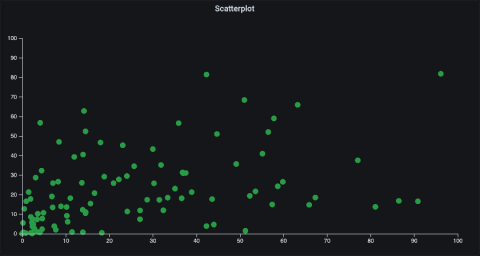
Learn Grafana: How to build a scatter plot plugin in Grafana 7.0

There are a lot of great things about Grafana 7.0, but one of my favorite features is the new React-based plugin platform, which has a set of new APIs and design system to help you build your own plugin. The process is easier and faster than ever. In this blog post, I’ll show how you can create a panel plugin for visualizing scatter plots. A scatter plot is a type of graph that displays values for (usually) two variables as a set of points along a horizontal and vertical axis.