Operations | Monitoring | ITSM | DevOps | Cloud

The latest News and Information on Monitoring for Websites, Applications, APIs, Infrastructure, and other technologies.

Reign in the Chaos of Security Threats with ChaosSearch

The Covid-19 pandemic has had an incredible impact on the world as nations work to keep their economies moving, secure the health and welfare of their citizens through social distancing, testing, and an immediate transition to remote work and classrooms. The world is adopting these measures while anxiously waiting for the great scientific institutions and private enterprises to test and deliver a vaccine to eradicate the SARS-CoV-2 coronavirus we know as Covid-19.

Logging Best Practices Part 4: Text-based logging

Isn’t all logging pretty much the same? Logs appear by default, like magic, without any further intervention by teams other than simply starting a system… right? While logging may seem like simple magic, there’s a lot to consider. Logs don’t just automatically appear for all levels of your architecture, and any logs that do automatically appear probably don’t have all of the details that you need to successfully understand what a system is doing.

Getting Github Data with Webhooks (Part 2)

After my last blog around sending Github Data to Splunk via Webhooks, I received a healthy amount of feedback that I want to address here. I learned that (unsurprisingly) a lot of customers are curious about, or dependant on, other cloud platforms out there. In fact, I heard directly from some customers who specifically cannot use any other cloud platforms than one in particular that was not highlighted in my last blog.

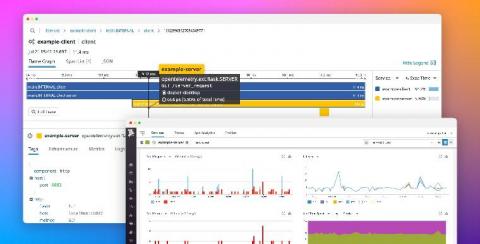
Instrument your Python applications with Datadog and OpenTelemetry

If you are familiar with OpenTracing and OpenCensus, then you have probably already heard of the OpenTelemetry project. OpenTelemetry merges the OpenTracing and OpenCensus projects to provide a standard collection of APIs, libraries, and other tools to capture distributed request traces and metrics from applications and easily export them to third-party monitoring platforms.

How to maximize span ingestion while limiting writes per second to a Scylla backend with Jaeger tracing

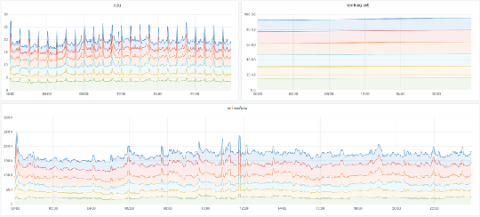
Jaeger primarily supports two backends: Cassandra and Elasticsearch. Here at Grafana Labs we use Scylla, an open source Cassandra-compatible backend. In this post we’ll look at how we run Scylla at scale and share some techniques to reduce load while ingesting even more spans. We’ll also share some internal metrics about Jaeger load and Scylla backend performance. Special thanks to the Scylla team for spending some time with us to talk about performance and configuration!