The latest News and Information on Monitoring for Websites, Applications, APIs, Infrastructure, and other technologies.
Imagine a man, a metaphorical man, slumped over, sitting silently across from you. Do you see him? Hastily smashing his fingers against the keyboard with a feverish sweat running down his neck. He, like many, only opens his APM solution after those universally feared “oh shit!” moments. Like a firefighter with a magnifying glass, he dives into his logs looking for a needle in a haystack. But you… Well, you know better than that. You wouldn’t just use your APM on bad days.
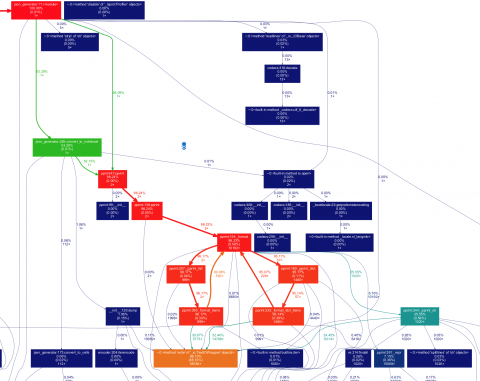
July 08, 2019 In this post, we will walk through various techniques that can be used to identify the performance bottlenecks in your python codebase and optimize them. The term "optimization" can apply to a broad level of metrics. But two general metrics of most interest are; CPU performance (execution time) and memory footprint. For this post, you can think of an optimized code as the one which is either able to run faster or use lesser memory or both. There are no hard and fast rules.
Lazy loading of dashboard panels has been a popular feature request from the Grafana community for many years, and it was finally added in v6.2. In previous versions, the moment you opened a dashboard Grafana will issue queries for every panel, even those you have to scroll to see. This can create high peaks in load to your data source backends. Meanwhile, you may never actually scroll down to look at all of those panels, so executing queries for those panels would have been pointless.
SEO is an important aspect of web and the growing trend of Internet shopping has made SEO an essential aspect to achieve success in any online endeavors. We live in a modern age where our digital world surpasses our physical one and just having a basic understanding of it is not going to take you anywhere.