Operations | Monitoring | ITSM | DevOps | Cloud

The latest News and Information on Monitoring for Websites, Applications, APIs, Infrastructure, and other technologies.

How to Manage Icinga with Ansible Webinar

Managing monitoring environments shouldn’t be a manual chore. In this hands-on webinar, we show you how to fully automate your Icinga infrastructure using the Ansible Collection for Icinga. We take you step by step through everything from installing Icinga 2 to configuring master instances, setting up monitoring agents, building core objects, and integrating common components like Icinga Web, all driven by Ansible.

Claude Code + Lightrun MCP: Your AI Agent Now Has Live Runtime Vision

Claude Code, Anthropic’s coding agent, now integrates with Lightrun through MCP. AI code assistants have been flying blind. Google Dora’ 2025 report found it is causing, an almost 10% increase in code instability. Even with up to 1M tokens of context available in Claude, this powerful agenti cannot see how the code it writes actually behaves inside a live system under real traffic, real dependencies, and under a load of 10,000 requests per second.

Claude Code is running bash commands on your infrastructure. Here's how to watch it.

I’ve been staring at Claude Code telemetry for the past few weeks, and I keep noticing the same thing: most teams drop it into their environment, say “it’s amazing,” and have absolutely no idea what it’s actually doing at the system level. That’s fine for a personal dev tool. It’s not fine when you’ve rolled it out to 50 engineers.

How to Perform a Network Health Check: Step-by-Step Guide

Your apps are slow. Users are complaining. You're staring at a dashboard trying to figure out what broke and when. Sound familiar? This is the reality of reactive network monitoring. By the time someone opens a ticket, the issue has already been affecting performance for minutes, sometimes hours. A network health check flips that script. Instead of chasing problems after the fact, you're catching them before users ever notice.

You're probably overdue for a Sentry SDK upgrade

Session Replay. Structured logs. AI monitoring. Automatic OpenTelemetry tracing. Feature flag tracking. If you haven't seen these in your Sentry dashboard, your SDK version is probably the reason. Whether you're on @sentry/react, @sentry/nextjs, @sentry/vue, @sentry/angular, @sentry/sveltekit, or any other @sentry/* package, they all version together. When we say v10, we mean all of them.

The Cognitive Ceiling: Why Modern Environments Outgrew Human Interpretation

For more than a decade, organizations invested in tools and telemetry with the belief that more visibility would create more control. Monitoring expanded across cloud, application, network, and infrastructure layers. Observability platforms entered the mainstream. Automation tools promised faster detection and improved coordination. Yet despite these advancements, incidents are not easier to understand. War rooms still fill with conflicting interpretations. Signals generate more questions than answers.

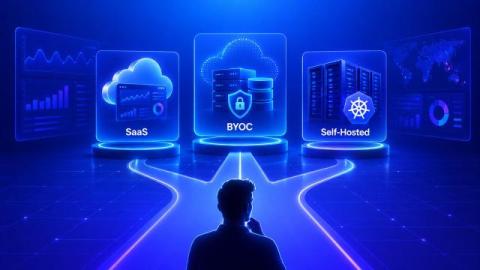
Architecting Log Management for Privacy and Scale without the Headache

As companies grow, they inevitably hit a wall: observability data explodes while privacy requirements become stricter. For years, engineers have faced a painful tradeoff—either ship petabytes of sensitive data to a central cloud (incurring egress costs and compliance risks) or manage a complex self-hosted stack that is painful to scale.

Unifying Telemetry in Battery Energy Storage Systems

Battery energy storage systems (BESS) play a critical role in modern energy infrastructure. Utilities rely on these systems to balance renewable generation, stabilize grid operations, and respond to changing electricity demand. As deployments scale in size and complexity, operators require continuous insight into battery health, system performance, and grid interaction. Operators rely on telemetry generated across several operational platforms.