Operations | Monitoring | ITSM | DevOps | Cloud

The latest News and Information on Observabilty for complex systems and related technologies.

Uptrace Tutorial: Dashboards, Percentiles, Heatmaps & OpenTelemetry Metrics

Learn how to use *Uptrace* to measure what truly matters in your applications using percentiles, heatmaps, and histograms—then turn that data into dashboards that answer questions before they’re even asked. In this tutorial, you’ll discover how to: Whether you’re setting up observability for the first time or replacing expensive monitoring tools, this guide shows how Uptrace helps you understand performance, reliability, and user experience — all in one place.

End-to-End Tracing with Uptrace: Follow Any Request Across Your Entire System

Stop guessing where requests slow down. With Uptrace, you can follow any request across your entire system and instantly see performance bottlenecks, errors, and latency sources. This video covers: Build real observability, not just dashboards.

Happy Birthday to Us: Honeycomb 10 Year Manifesto, Part 1

Christine and I started Honeycomb in 2016, which means it’s been ten years. Christine, a developer, and I, an operations engineer, were both profoundly unhappy with the state of the art in monitoring and logging tools. The tools we had used at Facebook didn’t spray our signals around to a bunch of siloed-off pillars. They consolidated as much context as possible so we could properly explore it, the way every other non-software engineering team already takes for granted.

ilert now supports a native WhaTap integration

ilert now supports a native WhaTap integration, connecting AI-native observability with AI-first incident management in a seamless workflow. This integration allows DevOps, SRE, and IT teams to move instantly from detection to resolution – cutting through alert noise, improving coordination, and dramatically reducing MTTR in even the most complex IT environments.

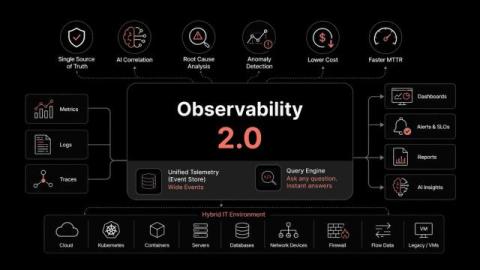
The Architecture Shift Powering Network Observability

If you work in network operations, you know that the only constant is the increasing complexity of the infrastructure you manage. The days of installing a monolithic software package on a single bare-metal server and letting it hum along for years are largely behind you. The software industry has largely shifted toward cloud-native architectures, microservices, and containerization. While these shifts promise agility and scalability, they also introduce significant operational complexity.

Kubernetes Network Observability: Comparing Calico, Cilium, Retina, and Netobserv

Calico, Cilium, Retina, and Netobserv: Which Observability Tool is Right for Your Kubernetes Cluster? Network observability is a tale as old as the OSI model itself and anyone who has managed a network or even a Kubernetes cluster knows the feeling: a service suddenly can’t reach its dependency, a pod is mysteriously offline, and the Slack alerts start rolling in. Investigating network connectivity issues in these complex, distributed environments can be incredibly time consuming.

Why distributed observability is straining and what new research reveals

Distributed systems quietly run much of today's digital world. People expect these systems to work reliably across regions and time zones for everything from money transfers to streaming platforms and AI-driven workloads. As organisations use more microservices, containers, and event-driven architectures, observability has become the main way for teams to understand what is happening in production.

Heartbeat behind the metrics | Muraleedharan on support, scale, and seeing the product in the wild

What does observability look like when you’re responsible for customers at scale? In this episode of Heartbeat Behind the Metrics, Muraleedharan Sadhasivam, Head of Customer Success, talks about his 15-year journey at ManageEngine and the perspective you only get from being close to customers every day. He shares why custom dashboards matter so much, and why AppLogs is a feature he wishes more users explored to complete the MELT story. From querying logs to turning them into alerts and dashboards, he explains how real insights start when data is brought together.