Operations | Monitoring | ITSM | DevOps | Cloud

The latest News and Information on Observabilty for complex systems and related technologies.
Google's Agent-to-Agent (A2A) Protocol is here-Now Let's Make it Observable

Can your AI tools really work together, or are they still stuck in silos? With Google’s new Agent-to-Agent (A2A) protocol, the days of isolated AI agents are numbered. This emerging standard lets specialized agents communicate, delegate, and collaborate—unlocking a new era of modular, scalable AI systems. Here’s how A2A could transform your workflows, and why making it observable is just as important as making it possible.

Observability Best Practices: Balancing Sustainability and Cost in a Data-Driven World

Imagine this: Your IT team has invested in cutting-edge observability tools to keep systems running smoothly. But does that imply you are following observability best practices? As your business grows, so does the flood of logs, traces, and metrics—along with a skyrocketing cloud bill. What started as a way to gain better visibility is now a major expense, and suddenly, you’re asking: Are we paying too much for too little value? This challenge is becoming all too common.

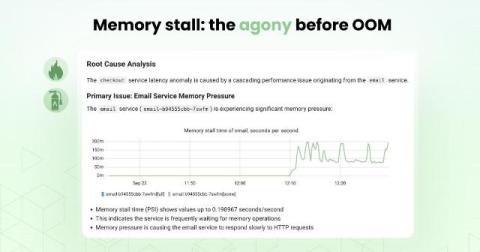
We built AI-powered Root Cause Analysis that actually works

Figuring out why things break still sucks. We’ve got all the data: metrics, logs, traces, but getting to the actual root cause still takes way too long. Observability tools show us everything, but they don’t really tell us what’s wrong. So why do we even need to automate root cause analysis? First, time. Outages are expensive. And if your system has hundreds or thousands of services, digging through everything by hand just takes way too long.

SQL Server Observability: Monitoring, Troubleshooting, and Best Practices

For DevOps teams managing mission-critical databases, SQL Server observability is a fundamental capability that provides comprehensive insight into database performance and health. Effective observability practices enable teams to identify potential issues before they impact end users and provide the context necessary to resolve problems efficiently. SQL Server observability involves collecting and analyzing metrics, logs, and traces to build a complete picture of database behavior.

Reporting CSP Errors in Honeycomb With the OpenTelemetry Collector

The HTTP Content-Security-Policy response header is used to control how the browser is allowed to load various content types. It is used to control which URLs, fonts, images, scripts, and more can be loaded onto the page. It’s a great defense against XSS (cross-site scripting), clickjacking, and cross-site vulnerabilities. The header can also specify a URL that will be used to send reports on violations of these properties.

Logz.io Integration for AWS and Kubernetes Observability

Ever feel like you’re flying blind in your AWS environment? You’re not alone. In the sprawling universe of microservices, containers, and serverless functions, trying to troubleshoot without proper observability is like trying to find a bug in a datacenter… with the lights off… while wearing sunglasses.

Cribl Edge: Unify Telemetry Collection | Lightboard Demo

Cribl Edge is a vendor-neutral, intelligent agent designed for the variety and scale of today’s modern architectures. With a unified telemetry collection system, you can have hundreds of thousands of agents at your fingertips to automatically discover and collect data from your Windows, Linux, and Kubernetes environments. Featuring a rich UI, centralized fleet management, and seamless upgrades, it’s time to transform your agent management.

Mission-Critical Visibility: How Observability Empowers the DoD

Tech is entering another wave of innovation with AI. With accelerated innovation comes increased complexity in already disparate environments. For Defense, those complexities are compounded by the need to maintain and operate mission critical infrastructure with highly sensitive data in air-gapped environments, often running on custom digital systems and applications. Accelerating the speed of innovation with leading technology is key for the military to maintain its competitive edge.

Why no one talks about querying across signals in observability?

In today’s complex distributed systems, observability has evolved from a nice-to-have feature to a mission-critical engineering discipline. Engineering teams across organizations depend on robust observability to maintain system reliability and quickly diagnose issues when they inevitably arise. However, current observability tooling significantly lags behind user expectations by failing to support a critical capability: querying across different telemetry signals.