Operations | Monitoring | ITSM | DevOps | Cloud

The latest News and Information on Serverless Monitoring, Management, Development and related cloud technologies.

Lumigo adds monitoring support for AWS Chalice

We’re pleased to announce that the Lumigo serverless intelligence platform now supports the Python microframework, AWS Chalice. Chalice was created by AWS to simplify the process of writing serverless apps in Python. Similar in structure to the Flask web framework, Chalice handles much of the configuration on behalf of the user, including automated IAM role policy generation.

Running Lambdas on your Laptop

Serverless has the potential to bring massive ops advantages to projects of all sizes, but while it presents great business benefits, we need to spare a thought for how teams develop on serverless. I recently published ‘Serverless Development is Broken’ a list of concerns about how developers can work with long deploy times inherent in a cloud-only code environment.

Write to S3 and call other Lambdas with Python

Many people writing about AWS Lambda view Node as the code-default. I’ve been guilty of this in my own articles, but it’s important to remember that Python is a ‘first-class citizen’ within AWS and is a great option for writing readable Lambda code. Take a look at these two starter examples of writing functionality in Python.

Better Logging for Lambda Functions

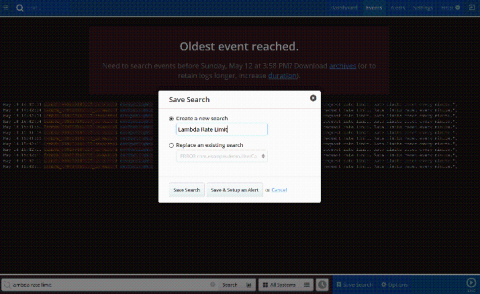
Serverless architectures such as AWS Lambda have created new challenges in debugging code. Without a solid logging framework in place, you could waste hours, or even days, tracking down simple defects in your functions. A strategic logging framework can be a powerful way to track down and resolve bugs. Let’s walk through how to get the most out of logging Lambda functions.

Deploying a serverless data processing workflow with AWS Step Functions

This is the first of a two-part blog series. In this post we’ll use Stackery to configure and deploy a serverless data processing architecture that utilizes AWS Step Functions to coordinate multiple steps within a workflow. In the next post we’ll expand this architecture with additional workflow logic to highlight techniques for increasing resiliency and reliability.

Are You Ready For Serverless Development?

The way we build software products changes all the time. Serverless architecture opens up new opportunities to create awesome products faster. Not only that, serverless applications are more scalable, secure and maintainable – all with much less code. Serverless is the future of development and you should get ready for it. But what does it mean to be a serverless developer? What do you need to understand before jumping into the serverless pool?

How do we set up a proper serverless development workflow?

If you’ve built a serverless application or two, you’re probably familiar with the benefits of serverless architecture. You take advantage of already built, managed cloud services to handle standard application requirements like authentication, storage, compute, API gateways, and a long list of other infrastructure needs. You can spin up these resources in a matter of minutes and add your own specific business logic (usually as AWS Lambda function code).