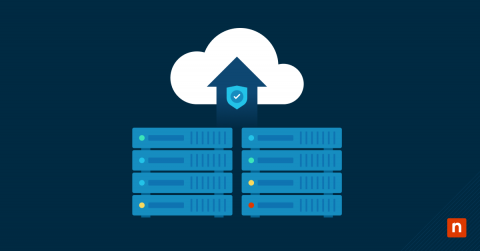
Today, data is one of the most valuable business assets. To ensure that the information stored in servers remains safe and accessible at all times, IT professionals rely on data backup. There are many types of data backup options for servers that save time and space, such as differential backup and incremental backup, but these do not capture the data in its entirety. Whenever IT teams need to capture all the data stored on a server, they conduct a full server backup.
As new incidents emerge, there are often many unknowns about the size, severity, and cause of the problem. Sometimes it’s not clear if the problem is an incident at all. That’s where introducing a triage stage to your incident management process can help. In this post, we’ll look at the benefits of adding a triage layer to your incident management, and how Rootly’s Triage feature allows you to seamlessly transition from triage to real incident (or false alarm).
Distributed tracing enhances observability by providing detailed insights into the performance, behavior, and dependencies of your distributed system. It empowers you to proactively identify and resolve issues, optimize performance, and deliver a reliable and high-performing application.
With the DevOps movement becoming mainstream, more and more developers are getting involved with the end-to-end delivery of web applications, including deployment, monitoring performance, and maintenance. As an application gains more users in a production environment, it’s increasingly critical that you understand the role of the server.
Python is a highly skilled language with a large developer community, which is essential in data science, machine learning, embedded applications, and back-end web and cloud applications. And logging is critical to understanding software behavior in Python. Once logs are in place, log monitoring can be utilized to make sense of what is happening in the software. Python includes several logging libraries that create and direct logs to their assigned targets.