Operations | Monitoring | ITSM | DevOps | Cloud

5 tips for choosing a managed database service provider | Aiven Cloud Chats

Aiven's Senior Solution Architect David Esposito goes through five important tips on choosing the right DBaaS vendor for your situation. Having these in your back pocket when you're looking for your future service provider should make the process a bit easier. And ultimately help you make the right choice! TIMESTAMPS

6 Best Tools for Automated Network Management + Guide

In today’s technology-driven world, network automation tools have evolved from convenience to necessity in practically every IT field. Traditionally, IT managers would issue manual command lines to manage networks, but given the size of today’s business networks, manual workflows dealing with repetitive network tasks have become time-consuming and counterproductive, often at risk of incurring errors from manual implementation.

How Database Performance Analysis Can Inform Database Selection

There’s a big difference between the MySQL database powering your internet of things (IoT) lightbulb and the one powering your website. There’s a chasm between the SQL Server Express database in your lightly used application’s VM and the monster multi-region SQL cluster you have running on Microsoft Azure. This kind of database diversity is everywhere today. But what are the differences between these databases, and how can administrators justify database spend?

7 Strategies to Contain Network Costs (Layer 6 Will Amaze You)

First, thanks for indulging the clickbait title joke. Serialization is the unsung hero of harmonizing network and application relations and deserves the occasional, snarky callout. Moreover, identifying how the unique mix of network clients in your environment consume your carefully manicured infrastructure is critical for managing network cost. Because today, a rapidly expanding, diverse pile of new technologies all assume the network is a magic grid, no tuning required.

Quick Demo: Updated Magisk Systemless Root Detection and Remediation

Magisk is a very sophisticated systemless rooting technique that can bypass Google's SafetyNet attestation and allow apps like Google Pay, many banking apps, and even Fortnite and Pokémon Go games to be installed on a rooted Android device. Rooting an Android device is popular to allow the user to customize and tweak their device by allowing the installation of third-party apps and tools, removavl of bloatware, and speed up the processor and network.

Ivanti User Workspace Manager Update: 2021.1 Release

Ivanti User Workspace Manager (UWM) 2021.1 is a major release focused on quality, stability and several feature enhancements. As of version 2021.1, Application Control offers a native user interface inside the AC console. This interface presents an aggregated view of events captured from all managed endpoints. The events are filtered and categorized on a per-feature basis and can be seamlessly translated into policy actions via drag-and-drop functionality.

Anatomy Of The Recent Salesforce Outage - Hard Lesson For All SaaS Application Providers And Users

At Catchpoint, I work as a Solutions Engineer. Being on the sales side, one of the applications I use a lot is Salesforce, the CRM platform used at Catchpoint and thousands of other organizations. You don’t have to take my word for it. Here is Catchpoint’s endpoint monitoring data showing I speak the truth!

The rise of the developer platform

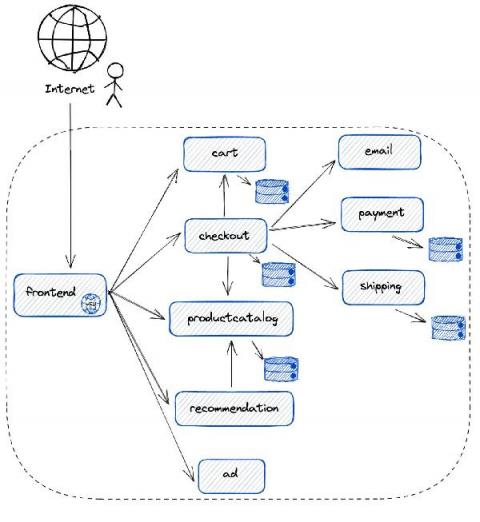
I have recently seen quite a few articles and talks covering why organizations are aiming at implementing a developer platform to help speed up the adoption of microservices within their organizations but before we get started on discussing what a developer platform is, the developer experience and productivity on Kubernetes, and how different teams are working through it, let’s define some common ground.

The Hidden Cost of Sampling in Observability

Today’s software is incredibly complicated and creates tons of data. Metrics, logs, and traces are generated constantly by hundreds of services for even simple applications. Every transaction can generate on the order of kilobytes of metadata about the transaction — and multiplying that to account for even a small amount of concurrency can create a few megabytes a second (or ~300GB/day) of data that needs to be captured and analyzed for later use.