Operations | Monitoring | ITSM | DevOps | Cloud

Mastering Azure Monitor, with Richard Benwell

With more and more businesses moving into the cloud, many of us are increasingly faced with the need to monitor our Azure applications in Azure Monitor – but where to start? If you’re feeling lost or overwhelmed by the platform’s sheer range of functionality, you’re not alone, and we’ve got some useful resources for you.

Announcing the Open Observability Conference

Today, I’m excited to announce the Open Observability Conference – a virtual event on May 27th at 11:00am EDT providing a platform for learning, sharing and discussion of open source observability technologies for DevOps teams around the globe. Register for the Open Observability Conference here.

NodeJS Instrumentation - Adding Custom Tags to Spans | Datadog Tips & Tricks

In part 1 of this 4 part series, you’ll learn how to use manual instrumentation to add additional detail to traces. We’ll add new tags, or attributes, to the spans generated by our NodeJS application, allowing for more insightful data visualizations in App Analytics.

NodeJS Instrumentation - Creating Custom Spans for Method-Level Visibility | Datadog Tips & Tricks

In part 2 of this 4 part series, you’ll learn how to instrument your NodeJS application to capture custom method-level spans, allowing visibility into how specific methods behave in your application. Flame graphs allow for deep insight into the performance of your code. During instrumentation, we can capture custom spans for deeper layers of visibility in the resulting flame graphs. In this video, we use instrumentation to capture a method-level span, allowing us to see the performance of that specific method in our flame graphs in the Datadog UI.

NodeJS Instrumentation - Adding Analyzed Spans for Improved Data Analytics | Datadog Tips & Tricks

In part 4 of this 4 part series, you’ll learn how to add Analyzed Spans to your traces to open up even more data search and aggregation capabilities via App Analytics. In this video, we will walk you through how you can turn any span into an Analyzed Span. Analyzed Spans function like the root spans of a trace, allowing us to turn the tags embedded in them into facets for advanced data aggregation and searching in App Analytics. You can check out how to add tags to spans—and how to utilize them in App Analytics—in our first video of the series here (link to the first video).

StackStorm v3.2.0 released

May 1, 2020 By Eugen Cusmaunsa (@armab) and @punkrokk It happened! After a long wait, we’re more than excited to announce the StackStorm v3.2.0 release. The StackStorm project has had some turbulent times since the previous release almost one year ago. The new v3.2.0 version is the first release since the project joined the Linux Foundation, formed new Governance, and gathered a new team of Maintainers. Considering the amount of changes happened, it looks like a big restart for the project.

How to Monitor IIS

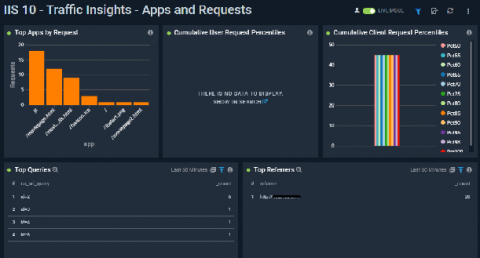
IIS is very popular in part because it provides such a compact service with lots of features and configurations. Most enterprises that use Windows Server editions are hosting their websites using IIS. When hosting critical applications, many companies use monitoring software to keep their system administrators informed about the overall behavior of their systems. Such software provides configurable alerts for performance counters, services and applications. We will talk about how to monitor IIS, what the most important performance counters are, and what services should be monitored when talking about Internet Information services.