

Operations | Monitoring | ITSM | DevOps | Cloud

Project Management for Small Engineering Teams: A Setup for One Afternoon

A ten person engineering firm usually has no project office. It has a handful of smart people, a shared drive, a few clients, and a deadline that arrived sooner than expected. The team is often spread over two or three cities, and half of the conversations happen in video calls. That setup works surprisingly well, right up until it doesn't. Usually the first sign is small. Two people have been working on the same drawing. A client asks for a status update and nobody can answer in under an hour. A decision from a Monday call is quietly forgotten by Friday.


How Does a Domain Protect Critical IT Infrastructures?

A digital address routes traffic and anchors trust. The domain is far more than a convenient label that users type into a browser, since it carries out essential functions that keep critical systems connected, authenticated, and protected from harm. For organisations running mission-critical operations, it functions as a gatekeeper that determines whether legitimate users reach a service and whether attackers are turned away at the door.

AI observability: Why traditional monitoring isn't enough for AI systems

Traditional monitoring watches four things: whether the system is up (availability), how fast it responds (latency), how often it errors (error rate), and how hard the underlying resources are working (resource utilization). This system works because software is deterministic: the same input produces the same output, so a deviation means something broke, and it announces itself as a timeout.

Top tips: What happens when boredom disappears?

Top Tips is a weekly column where we highlight what's trending in the tech world and share practical ways to stay ahead. This week, let's look at what happens when we fill every spare moment with digital content, why a little boredom might be useful, and how to make room for it in our screen-filled lives. Imagine you're waiting for your coffee. It's going to take three minutes, so you reach for your phone.

Identity Management and BTP: An Unexpected Requirement

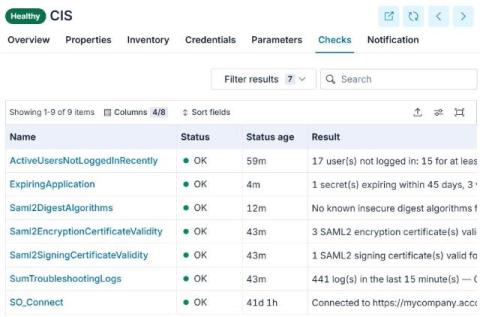
Ask an SAP Basis or security team how they control access to their ERP, and you’ll get a confident answer. User master records, PFCG roles, firefighter IDs, separation of duties policies, and an audit someone reviews regularly. Decades of audit findings have hardened those controls. Ask the same team who can deploy code to their BTP subaccounts, and the answer is far from so confident.

Sentry under 8 mins

If you've never used Sentry, this is the short version. In under eight minutes, we walk through what it does, what it captures, and where to go next. Sentry is an application monitoring platform. It collects errors, logs, timings, and replays, and ties them together with tracing, so you can go from "something broke" to the line of code that broke it without opening six tabs. Here's what we cover: On data: out of the box, Sentry scrubs things like passwords, tokens, and credit card numbers. You decide what else gets collected, and you can choose US or EU storage.

What Anthropic's 6:1 AI Work Ratio Means for Every Business

Anthropic's AI agents are logging 6x more hours than the humans directing them. Is this the beginning of a fundamental shift in how businesses operate? New data from Anthropic reveals how AI agents are transforming the workforce, accelerating software development, and changing what employees actually do every day. But the biggest story isn't just AI productivity. It's what happens next.

PHP2Shell explained: blocked 22 hours before the patch existed

PHP2Shell let attackers run code on PHP servers without logging in, and updating a CMS or its plugins didn't help. Only a new version of PHP fixed it. In this explainer, we break down how the two flaws work (CVE-2026-109618 and CVE-2026-109619, both rated 9.2 critical) and what Upsun Cloud did between PHP's one-day warning and the fix. We get into.

Amazon told its engineers to stop chasing tokens

Amazon told its own engineers this week to stop tokenmaxxing. The memo circulated internally in September and Amazon published it on Tuesday, Oct. 27. Tokenmaxxing is the practice of using AI as heavily as possible with little regard for whether the output justifies the spend. The memo calls token usage, adoption rates, and code-change counts “deeply flawed” ways to measure a team.